Sergiu Mircea, BT, for Biz magazine: At the intersection between business and marketing
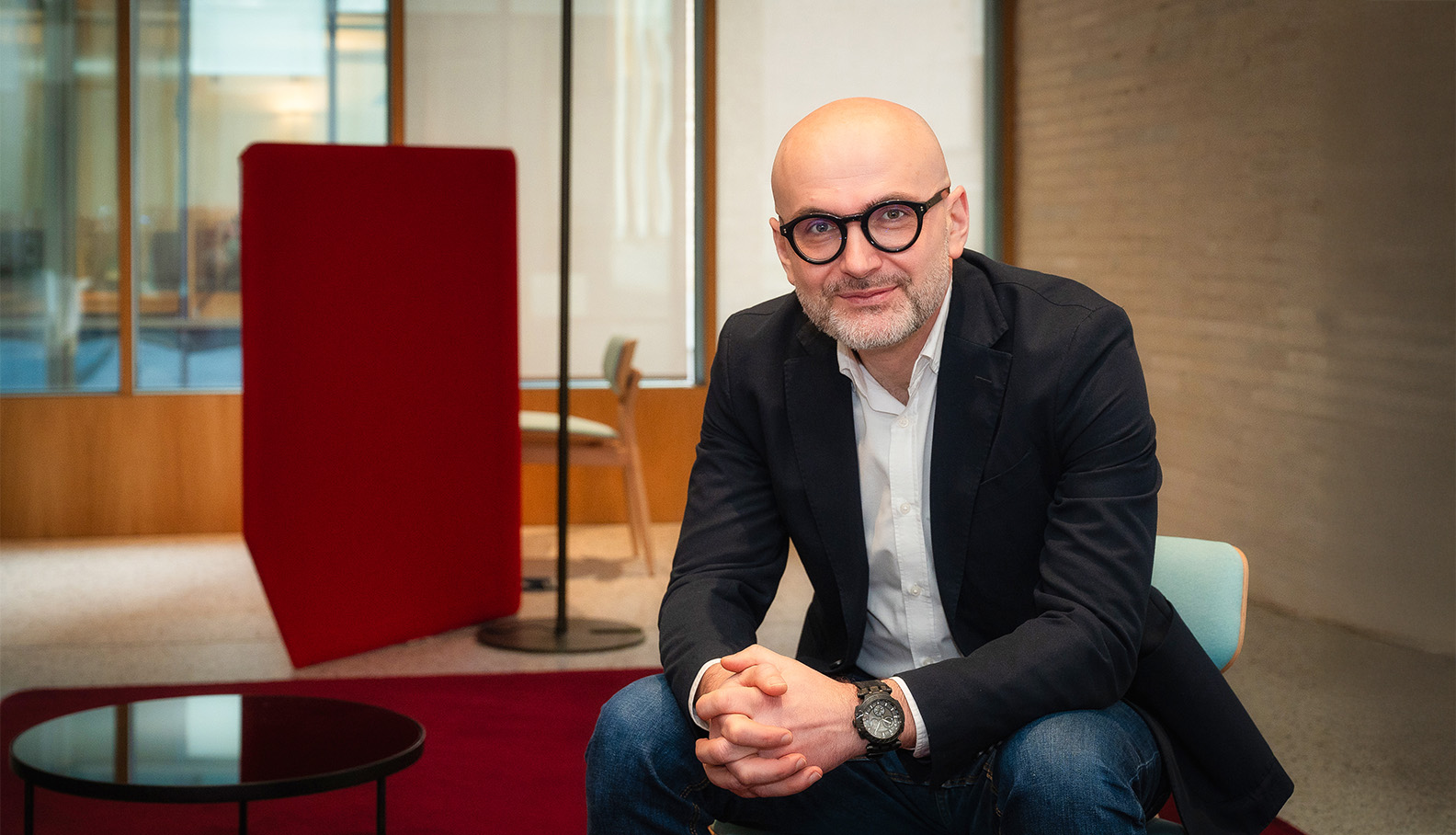
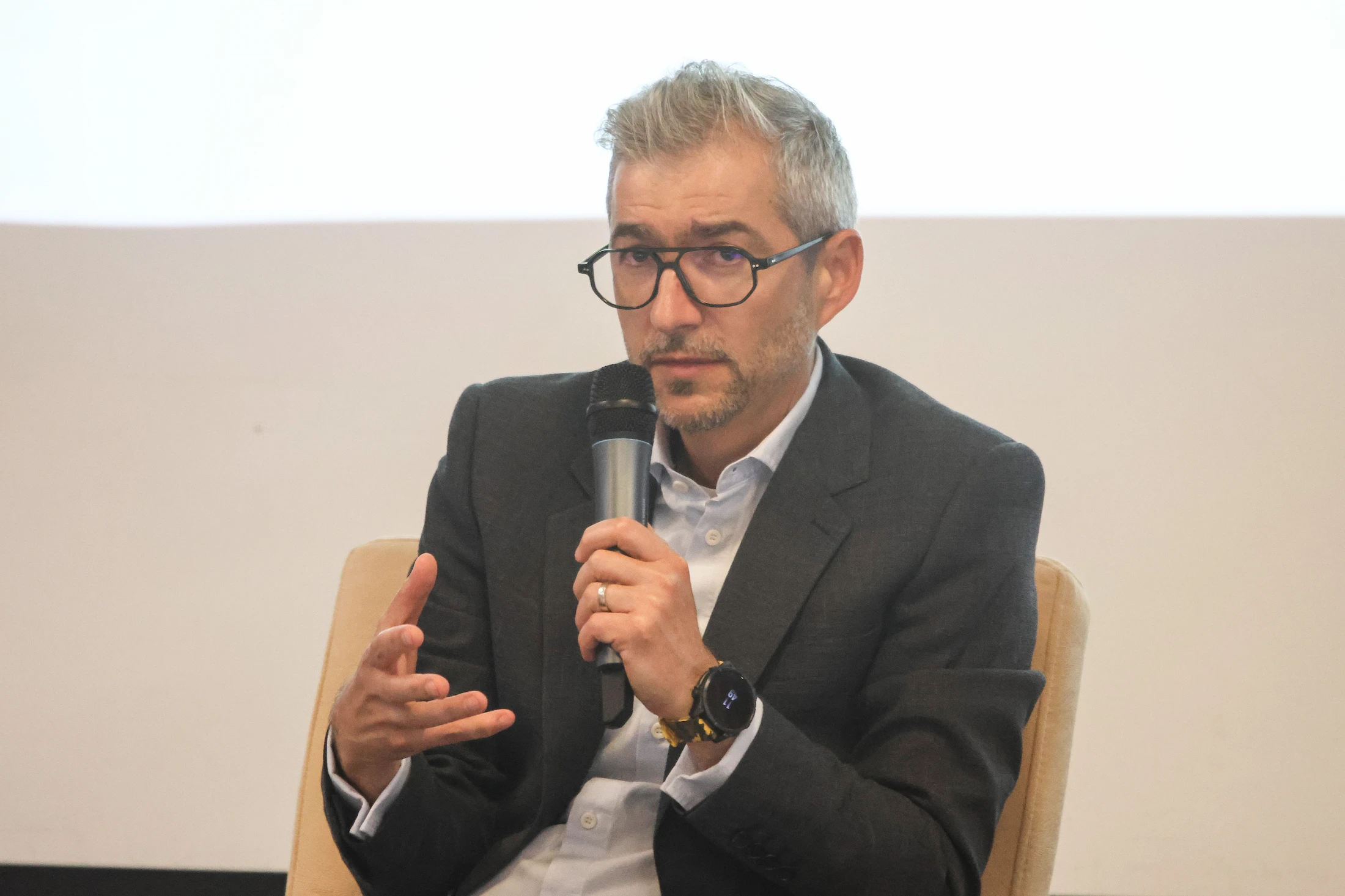
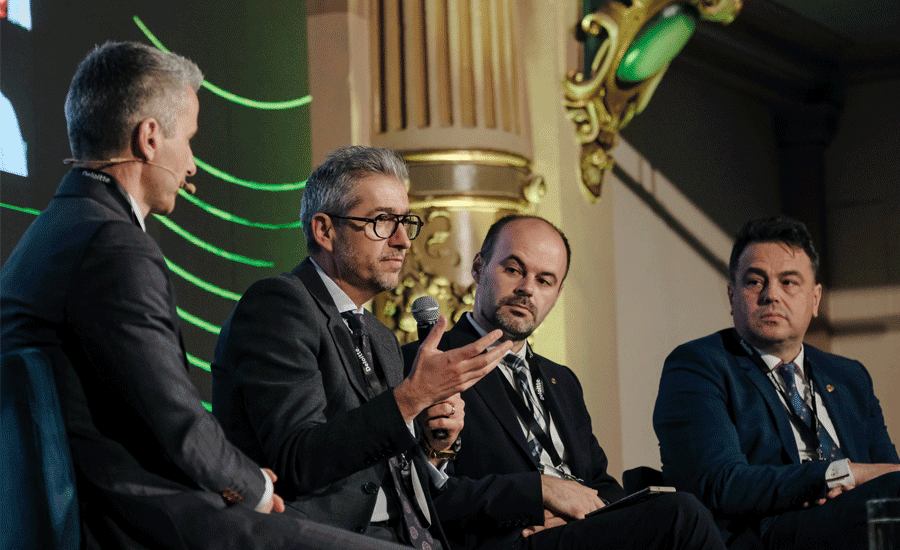
Sergiu Mircea, Executive Director of Marketing, Communication & Customer Care at Banca Transilvania, gave an interview to Biz magazine about marketing in banking.
How did you get into marketing? Did you want a career in marketing?
Yes, I think marketing and the business world is a dream come true for me. I've wanted this since high school and college and I've been, I would say, passionate about business and marketing since I was a child. Clearly, 20 or so years ago, business was different and the universe of companies in Romania (especially in Cluj) was much more limited. Not to mention our access to information, which was much more limited and much more local (less global), but marketing is for me a dream come true.
How did you learn marketing? Have there been people who have shaped your career - mentors, leaders, colleagues - from whom you've learned essential things?
I would say that I learned marketing at BT, but also through my personal approach to curiosity and self-learning. I was also very fortunate to have joined BT 22 years ago at a time when the bank was booming, it was a modern and extremely ambitious company with incredible momentum and growth. That helped me.
First of all, it helped me because there was a lot of work to do and that imposed a rhythm on me, and rhythm is important, especially when you are young. It matters a lot to be in a company that disciplines you and gives you the opportunity to always have a strong rhythm, to keep your dynamism and be efficient. BT gave me that rhythm. Then it helped me because it was a company with young, ambitious and professional people, from whom I had a lot to learn. But it also helped that in the last 20-something years BT has grown a lot, and it's very nice for a professional, but especially for a marketing professional, to work for a growing company. There are more opportunities, it's set at a certain pace and it gives you a good feeling. You see and feel the growth and that helps.
Equally, I think I have been very fortunate to meet people at the bank and in our partner ecosystem from whom I have learned a lot and who have been and are true mentors. Overall, BT has at its core a unique DNA that combines courage and initiative with curiosity and ambition for continuous development, and in that respect I have been and am privileged to work with some incredible people. I would also mention here how important it is that the organization and hierarchy is based on trust, decentralization and empowerment. I think that helps us enormously - because when the organization trusts you, taking decisions and having the courage to do things is much easier.
What do you like most in this field?
In general, I think that marketing and communication in banking is somewhat at the intersection of business and marketing, much more business-oriented (as opposed to marketing or advertising) compared to other sectors and types of companies. I mean, you can't really communicate well for a bank if you don't have a good understanding of how the bank's business, the economy in general, and further on the customers' businesses work. This is one of the things I like most - in my current position.
Otherwise, I strongly believe that Banca Transilvania is a company with a much stronger "meaning" and purpose, beyond business, it is a company that has an important role in the country's economy and that makes a real contribution to the progress of our country. It is a company with a mission. And that is a wonderful and highly motivating thing, for me, but in general for all our colleagues and partners.
Which campaign are you most proud of?
I am also proud of the campaigns, but especially of the team and mindset we have built in the marketing and communications area at BT. We have a very good team, a combination of experience and knowledge, with very young people, who know the trends and trends of the moment and have the energy to fight. On this foundation we have built a mindset where we work "in house" much of our communication strategy, but also implement a lot. So we have moved from an operating model of a few big campaigns a year to a large number of tactical or medium campaigns, which we execute in a much shorter timeframe or even real time.
If I had to think of a few campaigns though - I'm quite proud of our image campaigns, especially the BT rebranding almost 9 years ago. I would also add the bank's positioning campaigns or our December 1st campaigns, which have become a tradition and are expected by everybody, because they convey our message.
How much does budget matter? What about the strategies you choose?
Obviously, budget matters, but perhaps just as important is the efficiency with which it is allocated. And I'm talking about both the campaign strategy and the messages you use, as well as the media you adopt. We have almost always had a relatively contrarian approach in terms of advertising consumption - we were among the first large companies in Romania to invest heavily, even disproportionately, in social media, but also in influencer marketing.
Just as we were among the first companies to partner with major events and music festivals. Because we want to be where the people are. In the same way, even now we are among the companies that support journalistic projects, just as we did a few years ago. We don't diminish that support, because we believe that the way people interact with information is one of the biggest issues of the moment in society and we want to contribute to the health of journalism and the way people get informed.
How important is it to take ownership of what you do?
It's the most important, but I think it rather depends on the way the company you work in is built, the organizational structure and culture in the company. I don't think you can do a good job if you're not in a company that trusts and furthermore supports you to implement courageous communication. Consensus-based decisions or strategies and implementations that go with the flow have little chance of differentiation and won't get noticed by customers.
How do you explain that so many professionals in this field have changed? Is it a generational change or a change of perspective?
Communication is an area where things change very quickly. Trends are much more dynamic here. And that is why solutions that worked in the past are unlikely to work in the future. Just think over the last few years, we've gone from periods where communication was predominantly on TV and outdoor, and the stars were exclusively on TV. We are now in a society where communication is very much based on social media.
Just think that a few years ago we didn't have "fake news" or TikTok or Instagram in our vocabulary. These are structural changes, not just media changes. Anyone who looks at these structural changes as mere tactical shifts will struggle to deploy authentic, channel-tailored campaigns that have traction in the market. It will be tricky to stay relevant, to be where it matters to customers, to the company and to the messages being delivered. Marketing and communications are areas that require constant reinvention.
Can you give examples of campaigns that have impressed you?
In general, I am a fan of brand, positioning and image campaigns. Our mantra is that of a strong brand, running lots of campaigns to support the brand, and product campaigns are more about support. Probably for this reason, we look very carefully rather at companies that build strong brands, with aspirational and relevant advertising, but also with an authentic narrative. One company I notice in this category would be Nike, which relies very much on an aspirational brand, built with relevant advertising at key moments and an extremely broad portfolio of ambassadors.
How would you describe Banca Transilvania's marketing philosophy? What differentiates BT from other banks in Romania in the way it communicates?
First of all, I think that here too we have quite a big advantage in that we are a Romanian bank and the decision is local, and our main market is Romania. We have this "home market advantage" which allows us to know the market better and to connect much better and deeply with the local communities. In terms of our communication strategy, we have built on two main pillars. On the one hand, we have "we stand for something" - BT is a company with strong values and is attached to Romania, beyond the business itself. We want and do everything to make the country and communities work well, we care about the common good beyond business. It's a pillar that we reinforce with aspirational campaigns, inspiring Romanians and Romania so that we mobilize to take the country forward together.
On the other side, we're building on a pillar in the "fashionable" area, which starts from the premise that now part of our relationship with the bank has moved to the phone and each of us are pretty exclusive with the apps and brands we download on our phones. It has to be a cool, fashionable brand. This is where we're all betting on advertising, social media and celebrities, it's a mix that allows us to build an image of an "updated" bank, in step with our customers. In the same way, we are also building here with our participation in events and everything we do to be with young people and Gen Z, where we also have a dominant market share.
And I would also say that what sets us apart is our contrarian approach in terms of the channels and the advertising and communication modalities we use, much more oriented towards interaction, engagement and content, and less towards advertising on mass channels.
What are the key values you try to convey through BT campaigns? How do you adapt them to different audience segments?
BT talks a lot about Romania in communications and image campaigns. We try to inspire the country and Romanians to believe in their own strength and to have the courage to build great and beautiful things. To empower ourselves, to grow together. This is where we see the role of the bank in our society - a multiplier role which, through our activity and the financing of the economy and people, can bring prosperity and help close the gap between Romania and the West. This is the message and I believe that this is also the key values that we convey.
Can you tell us about a recent or iconic Transylvania Bank campaign that was awarded and what was the story behind it?
Instead of awards, we prefer other forms of recognition, without trying to argue for them ourselves. And one campaign I'm particularly fond of is BT's series of National Day positioning campaigns, which we launch every year on December 1. They are very important to us because they reinforce our core positioning - to inspire and support Romania. In this series of campaigns, we talked about hard work, courage and self-determination with ambassadors such as Simona Halep, Gheorghe Hagi, but also other great Romanian sportsmen and women, who have the authority to show us that when we really want something, we can only get it through hard work and determination.
If I were to think, however, of a recognition that honors us, it is the fact that Banca Transilvania is recognized in the Brand Finance top of the Brand evaluation, with a value of 950 million dollars, but especially that BT is recognized as the third banking brand in the world, after the brand strength indicator, which measures the strength of the brand.
I would say that the biggest challenge in bank marketing and communications is brand relevance and message authenticity. We live in a society where technology and social media have democratized communication, but also in a world where people are no longer sensitive to messages that may seem artificial. This is one of the reasons why we have more and more communication from companies, but it is becoming less and less relevant and the public no longer appreciate it in the same way.
3 achievements you are most satisfied with?
The team I've built here in the marketing and communications area at BT and the transparency and authenticity-oriented mindset that I've contributed to. The significant campaigns the bank ran, from the BT rebranding in 2016 to the December 1 image campaigns or the Simona Halep campaigns. The partnerships BT has with some iconic ambassadors, as well as many media outlets and journalists.
How do you see banking marketing evolving over the next 3-5 years? What role do technology and data play in this process?
Obviously technology is playing a very important role and we see this on many levels. First of all, we look at the ways we communicate and interact with our customers, where communication is totally changed - if a few years ago communication was face-to-face and we were talking about a retail experience (units in our case), now a lot of the communication has moved to the app or is digital anyway. That on one hand implies other technology capabilities that companies need, but also other skills in marketing and communications teams. We need colleagues who have a good and empathetic understanding of what a customer's journey, needs and anxieties look like in app and can operationalize effective in-app or online communication.
On the other hand, customer targeting capabilities are much better, as some advertising has moved from broadcast to online engagement channels. With this trend we have also seen a shift in communications and advertising from brand to product. Including many budgets moving to performance marketing online. And relationships have become much more transactional, with much shorter term marketing objectives.
Last but not least, the evolution of technology comes with significant challenges for the evolution of society. The way in which we interact with information has changed radically in recent years and this gives rise to all sorts of challenges, from the simple (how we choose the mix of channels in which we communicate and how we allocate budgets) to more complex challenges such as fake news, misinformation, the use of social media by fraudsters for online scams, phishing or brand safety in platforms.
Perhaps just as challenging for us in marketing and communications is that information and brand comparisons are much more globalized now - customers are comparing BT's Instagram to Netflix's Instagram. It's a tougher market in which local marketers also need to get better and better, regardless of the size of the company they work for.
How do you see marketing in Romania compared to other markets?
This is something we are quite proud of and I think Romania is doing very well in this respect. I don't think we are any worse compared to other markets. We have great companies and very good marketing, we have very good agencies that compete in global markets and we also have good content generated in social media or on TV. And the most important - we have very good (professional) people, cosmopolitan and exposed to the international environment, young people with ambition to do very good work. And it seems to me that we are also quite well connected to trends in markets bigger and deeper than ours.
What advice would you give to young people who want to work in marketing, especially in complex industries like banking?
At BT, in the segments and areas that I manage, we work with many young people, because our strategy here has been to grow a lot of talent "in house" and I think that from this point of view we are really a small talent factory for Cluj. And I can tell you that I am extremely excited about the generations that I see coming after us. They are very talented and knowledgeable young people. Much better exposed to information and knowledge than we were when we left school. I would say I'm quite confident and optimistic looking at the next generation.
In terms of recommendations, I believe that hard work, a lot of hard work, but also curiosity and the desire to learn, to be better and better are determining factors for anyone who wants to work in marketing in the long term. Marketing and communication are fields where knowledge and generally everything you know about the field is perishable and has a very short 'expiry date'. There are various studies which say that in marketing, every two years the paradigm shifts radically. This means, on the one hand, that those who want to be good in the field need to be good at both embracing the new paradigm, but also be willing to "challenge" themselves and not remain anchored in the past.
I recall here a relevant quote by Keynes: "The hardest thing is not to get new ideas, but to get rid of old ones". To stay up to date and to catch all these trends, it takes hard work, a continuous learning mindset and a willingness to work hard. And I also believe that it is very, very important to read a lot, to incorporate as much of the emerging information as possible, so that you stay connected to the market, to reality and especially to the feebdack of your customers.