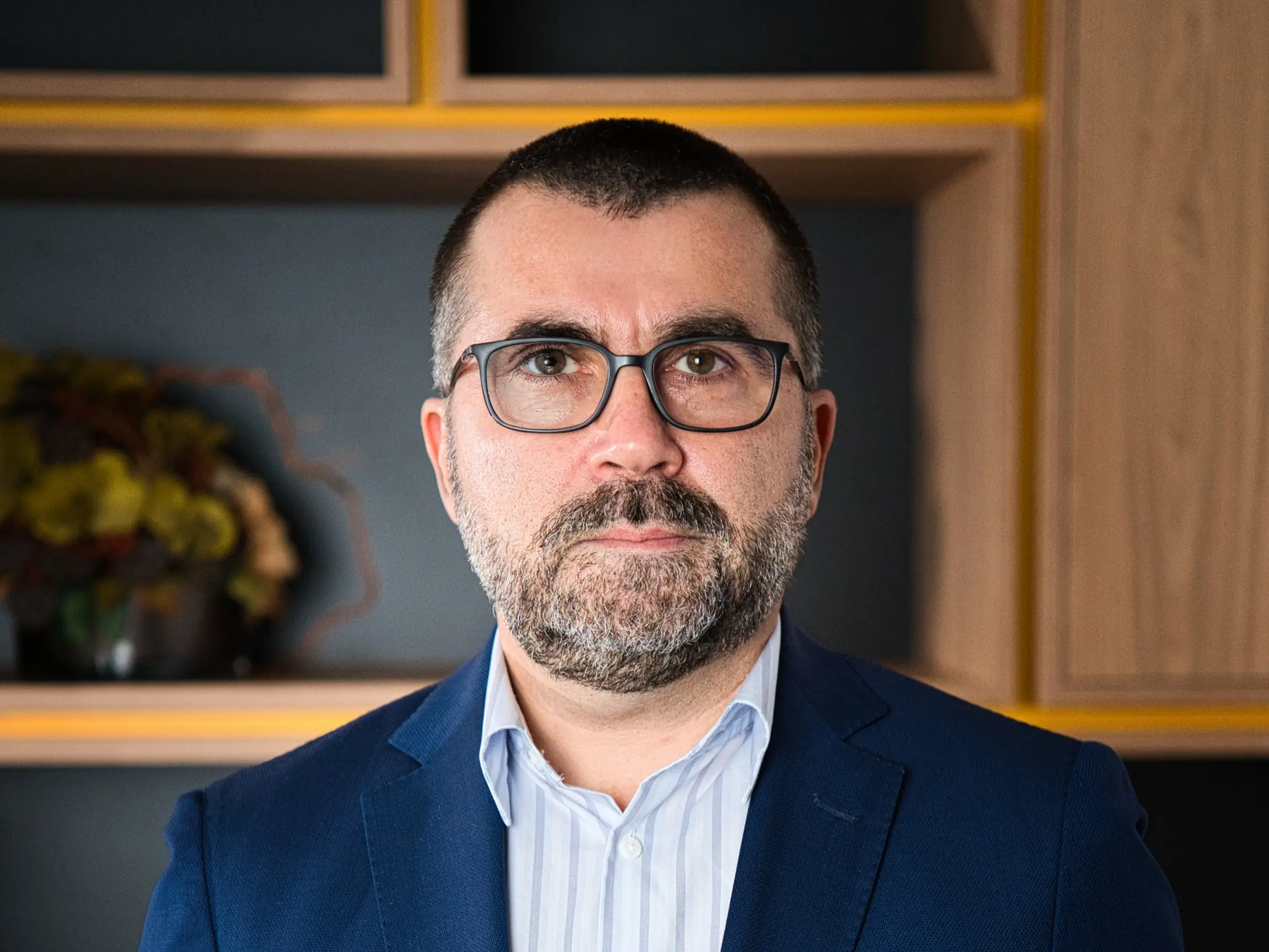
Ionuț Morar, BT Leasing: our vision is to transform leasing from a simple financial product into a platform of mobility solutions, technology and integrated services
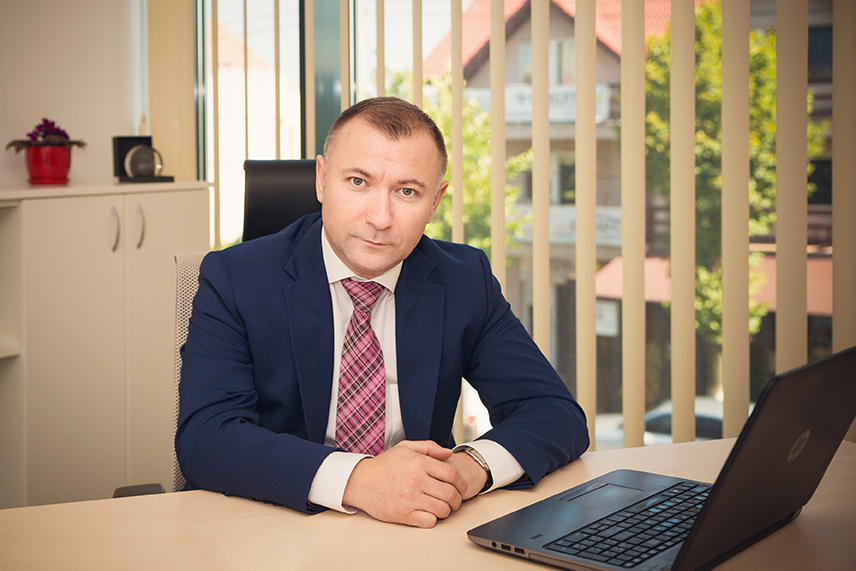
BT Leasing is celebrating its 30th anniversary this year, and on this occasion the company's CEO, Ionuț Morar, gave an anniversary interview to Capital, in which he talked about the company's beginnings, challenges, acquisitions, digitalization and strategic directions for the next years. The full interview can be read below:
BT Leasing celebrates three decades in business this year - what is the secret to longevity? How has the leasing market evolved in these 30 years?
In 30 years, we have been through several economic cycles, crises, legislative changes and technological transformations. The secret to our longevity has been a combination of customer care, financial prudence and the ability to adapt quickly. We have stayed close to Romanian entrepreneurs, car dealers or equipment suppliers, with whom we have built long-term relationships, not just contracts. The leasing market has evolved spectacularly - from an almost unknown service in the 1990s to an essential component of financing the real economy.
How were the beginnings? How prepared was the Romanian market in 1995 for leasing?
In 1995, leasing was an almost unknown concept. The economy was just reshaping itself, entrepreneurs had no access to finance, and legislation was just taking shape. We started out as a team of 3 people, with a lot of enthusiasm and pioneering role: explaining what leasing is, how a contract works and why it can be an alternative to credit. At that time, leasing also benefited from tax breaks, as customs duties were paid at the end of the leasing contract on the residual value of the asset, making the product more attractive for entrepreneurs.
What were the main challenges of the 1990s? Do any persist today?
The main challenges were lack of clear legislation, high inflation, lack of lending culture and high economic risks. We had to build the market and confidence at the same time. Some of the challenges have changed - for example, today we are no longer talking about the lack of legislative framework, but about its complexity. We are no longer talking about mistrust in leasing, but about rising expectations, digitization, compliance, ESG and European regulations. The essence remains the same: adaptation and responsibility.
What were the key moments in the evolution of BT Leasing?
We had a couple of defining stages:
- 1995-2000: setting up, first contracts, team formation.
- Joining the Banca Transilvania Group - the moment that gave us stability, capital and access to the largest network of Corporate and SME clients in Romania.
- The 2008-2009 financial crisis - when we chose prudence and risk control over growth at any cost.
- Accelerated digitization - launch of e-signature, fast approval workflows, fast leasing product (PLR).
- Acquisitions and integrations over the last 2 years, which have strengthened our market position and doubled our customer portfolio.
How has BT Leasing's portfolio of financial solutions evolved?
Our portfolio has evolved from classic finance lease products for new cars to a full range: new and used cars, commercial vehicles, heavy transportation, equipment, agricultural machinery, medical equipment and even real estate. We also have a sale & lease-back product through which we provide customers with long-term working capital. Today, we have a balanced structure between the automotive, commercial vehicles and equipment segments, and the share of each segment has adjusted organically in line with market and customer needs.
What services are currently most in demand?
Car leasing is still the most sought after because it is the fastest financing solution on the market, but we are seeing a growing demand for equipment and machinery leasing, especially in the SME segment, but also in the agribusiness sector.
What is the total value of contracts funded? How has it evolved?
Each year we have seen double-digit growth, supported by investments in technology, distribution expansion and collaboration with the Banca Transilvania network. In the last 2 years, the growth of the outstanding portfolio has been accelerated, due to the integration of the 3 leasing companies acquired by Banca Transilvania Financial Group - Tiriac Leasing, Idea::Leasing and OTP Leasing, which has consolidated our leading position in the Romanian leasing market. The current value of the outstanding portfolio exceeds RON 6 billion, but more important is the number of financed customers, which is approaching 45,000 and which we support in their investment plans.
What is the share of car leasing in the portfolio?
Car leasing remains the largest segment in BT Leasing's portfolio - both in terms of number of contracts and volume financed. It accounts for more than 80% of the total, including commercial vehicles, and demand comes predominantly from the corporate sector, but we also have individuals in the portfolio. Even if the equipment segment is growing, auto remains the mainstay, thanks to strong partnerships with dealers and car manufacturers.
Which options do customers prefer today - electric, hybrid or combustion? How do you see the evolution?
Demand for full electric vehicles has moderated compared to previous years, mainly due to the reduction in state subsidies for this category of vehicles. Another factor is the limited charging station infrastructure, and in this context, vehicles with internal combustion engines and hybrid, mild or plug-in technologies remain predominant.
But there is a growing number of companies that are setting sustainability targets in their development strategy, and not necessarily for legislative reasons, but out of concern for the environment, which leads me to believe that the migration to green vehicles will accelerate in the future.
How important is equipment leasing? How has it evolved?
The equipment segment has become BT Leasing's second growth driver in recent years. We finance industrial, agricultural, medical and manufacturing technology equipment, and demand comes mainly from companies that want to modernize their capabilities without tying up equity. Both in terms of the number of customers and volume, equipment leasing is showing accelerated momentum and is consolidating its share of the portfolio.
What are the main sectors you fund?
The main industries are transportation, construction, agribusiness, medical, logistics and services. We see the highest growth in agriculture, logistics and manufacturing, due to European investments and the need for digitalization. We are also increasingly exploring sectors such as green energy, technology and electric mobility.
What are the latest services launched?
We have regular campaigns and financing products specifically dedicated to the automotive sector, which include promotional pricing or subsidies for investments in technology and new cars. I would mention our BT Leasing 30th anniversary campaign, CelebRide, which has been very well received by the market, with sales in July up 50% on the average for the year. We also have a nationwide campaign with Toyota Romania, through which we support the cost of insurance in the first 3 months of the contract, and with Tiriac Auto we work very well on the fast leasing product for cars. We are also promoting the financing of full electric and hybrid vehicles, with well-defined sustainability objectives in our development strategy.
What role do acquisitions and mergers play in your growth strategy? How many companies have you taken over so far?
We are a Romanian company, which has grown organically from year to year, but also through strategic acquisitions: over time we have integrated 5 leasing companies, BT Medical Leasing, ERB Leasing, Tiriac Leasing, Avant Leasing and OTP Leasing.
If we refer to the leasing market data published by the Romanian Leasing and Consumer Credit Association, BT Leasing's market share is around 26%, which places us among the top leasing companies in our country. Acquisitions have accelerated our expansion, brought us new customer portfolios, valuable teams and know-how, and in this context, in our development strategy, we will carefully analyze any opportunity that may arise in the future.
How difficult is it to integrate an acquired company (e.g. OTP Leasing, Avant Leasing)?
Integration is about much more than transferring portfolios - it's about harmonizing processes, organizational culture, IT systems and the way you work with customers.
It is a complex process, but previous experience has helped us to manage it in a structured way: mixed teams, clear plans, transparent communication and respect for the people in the company being taken over.
What is the pace of organic growth? How is it sustained?
Organic growth is steady, we are budgeting double-digit growth every year, relying on partnerships with car dealers and cross-sell with Banca Transilvania. We have an increasing focus on operational process efficiency and digitalization, we want to develop our range of fast financing products, as well as provide adjacent services related to car maintenance and insurance, which we promote through our sales teams nationwide.
How has the number of customers evolved? How many are there now?
The customer portfolio has grown from several hundred in the early years to almost 45,000 active customers today. The annual growth rate has been steady and the structure is balanced between companies (SME & corporate), with individuals having a marginal share in the portfolio, as ownership of the good is an important element for consumers. In the future, as consumer habits change, we believe that more and more individuals will turn to leasing to purchase a car, as is the case in Western European countries.
How has leasing customer behavior changed in recent years?
Today's customer is informed, digital, speed-oriented and predictable. They want fast approval, clear costs, online access to contracts, flexible payment options.
We responded through digitalization, transparency and integrated solutions: leasing + insurance + related services.
Is there an impact of the current economic context? How do you manage risks?
Yes, we see a certain indecisiveness and postponement of some investment projects, as a result of the unstable macroeconomic and geopolitical environment, inflation and legislative uncertainties in Romania. However, we believe that entrepreneurs must not stop their development plans, they must continue to invest in efficient technologies, and we are here to support them with prudent lending policies, permanent portfolio monitoring, rapid adaptation of products and commercial conditions, and, last but not least, individual support for affected customers.
What role does financial education play in customer relations? Are there initiatives in this respect?
Financial education is essential, especially for SMEs and entrepreneurs just starting out. Proper understanding of the lease contract, the total cost of financing or the risks can make the difference between a successful investment and a burdensome one. We support financial education through webinars, guides, simple explanations in contracts, media presence and by working with the BT Group, which has numerous entrepreneurial and financial education programs.
Which digital solutions are most used by customers?
Technology has become the invisible infrastructure of business. It supports us from risk analysis to digital contract signing and customer relationship management.
The key projects were: digitization of the entire leasing workflow, electronic signature, automation of approval decisions, MyBTLeasing self-service platform, and in the future we are also aiming at integration with Banca Transilvania's digital ecosystem.
In the context of AI and automation, do you think technology will completely replace human interaction?
Technology can greatly streamline, but it cannot completely replace trust, empathy and understanding customer context. We believe in a hybrid model - digital where we can, human where it matters. Final decision, big investment advice or delicate situations will always need people.
How has the BT Leasing team evolved over time?
We started with a team of a few people. Today we are more than 300 colleagues, 80% concentrated in our two main offices, Cluj-Napoca and Bucharest, and the remaining 20% in BT branches in Romania, ensuring national coverage in customer relations. But the team has grown not only in numbers, but also in expertise, through internal training, leadership programs and the integration of colleagues from acquired companies.
How important is human capital in a company's strategy?
Leasing is not just a simple financial product, it is more about advice, solutions and trust, because the contractual relationship is for a minimum of one year, a term established by law. It is people who establish and maintain relationships with customers. Through the BT Academy we are constantly investing in training, digital skills, leadership and personal development programs and our culture is based on responsibility, initiative, honesty and entrepreneurship, in line with the BT Group values.
How complicated is it to integrate teams after mergers and acquisitions?
Integrating teams is probably the most sensitive part of an acquisition. Processes, IT systems and procedures align in a shorter time, but harmonizing organizational cultures and retaining valuable people takes time, dialogue and trust. Through transparent communication, respect for each team's identity, and dedicated onboarding programs, we believe we've largely succeeded in harmonizing. Proof of this are our financial results, which after integration are better than the sum of our individual results before integration. So 1+1+1+1+1 made 5 in our case.
How would you characterize the leasing market in Romania today? What trends are emerging?
The leasing market exceeds €5 billion annually and continues to grow. The main trends are migration to the online environment, digitization of support processes, increased financing for equipment and agriculture, increased interest in operational leasing and flexible mobility solutions and, last but not least, a move towards green and sustainable products (ESG).
How does Romania compare with other European markets? Is there still potential for growth?
Romania still has a leasing penetration rate below the EU average, only 3% of new cars registered in 2025 were leased, which means a great potential for development. Compared to Western Europe, we are in a phase of accelerated maturation, and the adoption of digital solutions and generational change will accelerate the pace. Romania has a leasing penetration of around 1.3% of GDP, while the EU average is around 4%. Nordic countries exceed 6%, while Poland and developed Western European countries are at 5%. We are in a phase of accelerated maturation, and the adoption of digital solutions and generational change will accelerate the pace of growth.
How important is state support for the leasing sector? What measures would help develop the market?
I believe that legislative and fiscal predictability and stability would be the most valuable form of state support. I also believe that leasing should be included in all government programs alongside bank credit because it is a viable alternative for supporting the Romanian economy and entrepreneurship.
There is also a need to simplify bureaucracy and to relax regulation, since by returning the asset to the leasing company and its onward transfer to another entrepreneurial user, the investment cycle in the economy continues, without any bottlenecks in the money flow. Leasing can therefore act as a lever for the economy, and should therefore be stimulated as an investment instrument through a specific regulatory framework, taking into account its specific features.
Estimates for 2025 - evolution by car, equipment, customers, contracts, assets, profit
We expect continued growth in both the automotive and equipment segments. The number of customers and the value of assets financed will be in line with budget, even increasing slightly by the end of the year, and profitability will be underpinned by operational efficiency and risk control.
What are the main investment directions? Are new acquisitions or mergers planned?
Investments are mainly focused on IT infrastructure and cybersecurity, AI technology in the support area and the automation of operational processes, as well as the development of the digital skills of our employees. We also plan to diversify existing products and develop new products in the mobility area. Acquisitions of course remain an option if they are strategic, complementary and sustainable in the long term.
What are BT Leasing's medium and long-term plans?
In the medium term, we are focused on growing the portfolio in a profitable and balanced way, strengthening synergies with BT Group, expanding in the equipment segment and improving the digital customer experience. In the long term, the objective is to become the leading integrated mobility and financing partner for as many companies and individuals in Romania as possible.
What is BT Leasing's vision for the next decade? What is the biggest opportunity?
Our vision is to transform leasing from a simple financial product into a platform for integrated mobility, technology and service solutions. The future will no longer be just about "buying an asset", but about smart, flexible and sustainable use of mobility and equipment. The biggest opportunity is belonging to the BT Financial Group and integrating into the bank's ecosystem of financial products and solutions to provide quick and easy access to our products to the nearly 5 million customers who currently have accounts with BT.
What message would you like to pass on to the customers and partners who have been with you for 30 years?
The most valuable thing we have gained in these 30 years is trust. We thank all the customers, partners and colleagues who have been part of this story. Every contract signed, every project, every challenge overcome has brought us here.
We promise to stay close, to innovate, to be responsible and to continue to build for people, business and the future of the Romanian economy.
The article published in the Capital print edition can be read here.