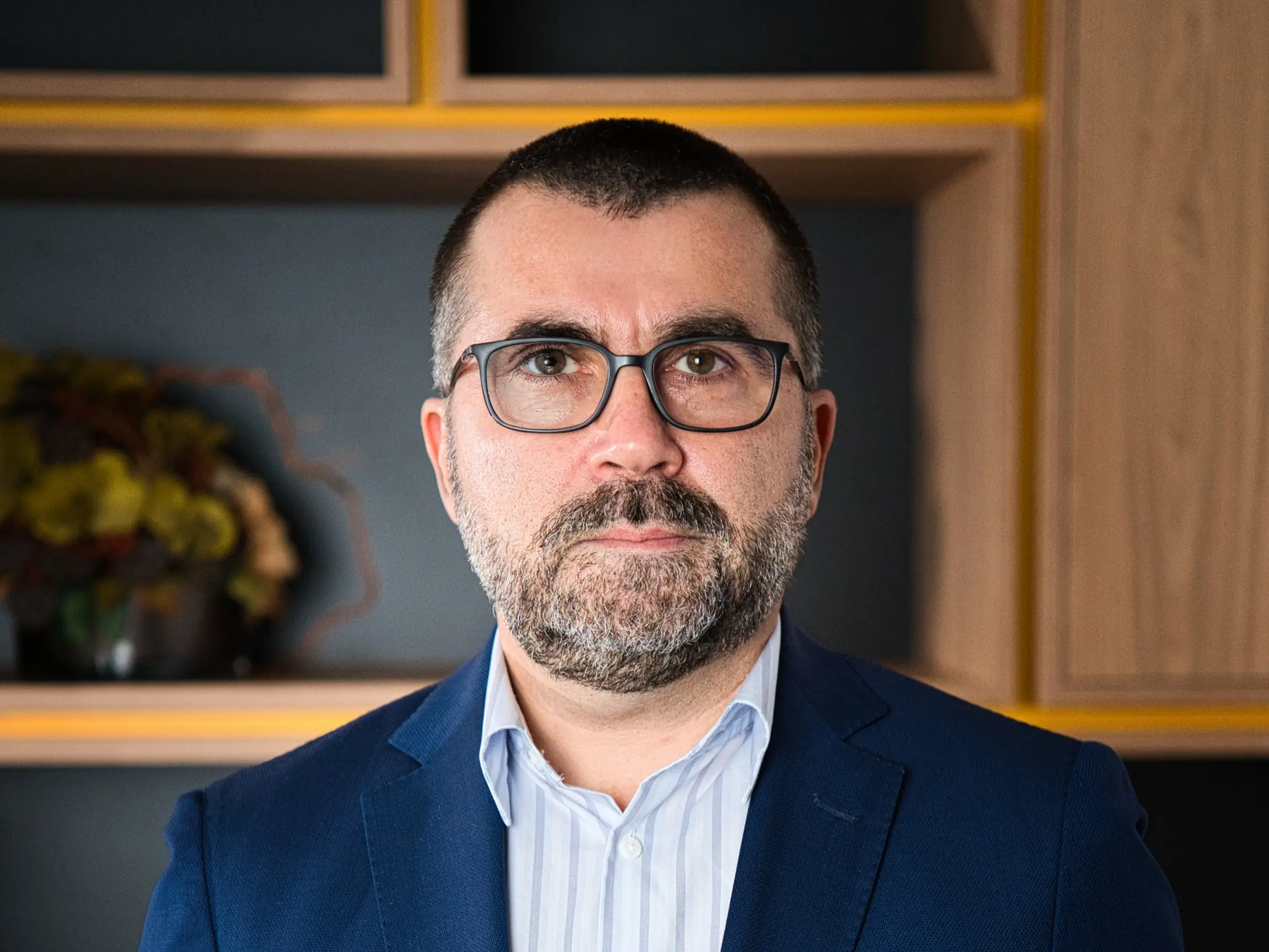
Sorin Ignat, BT: There are many farmers who are taking the step towards added value.

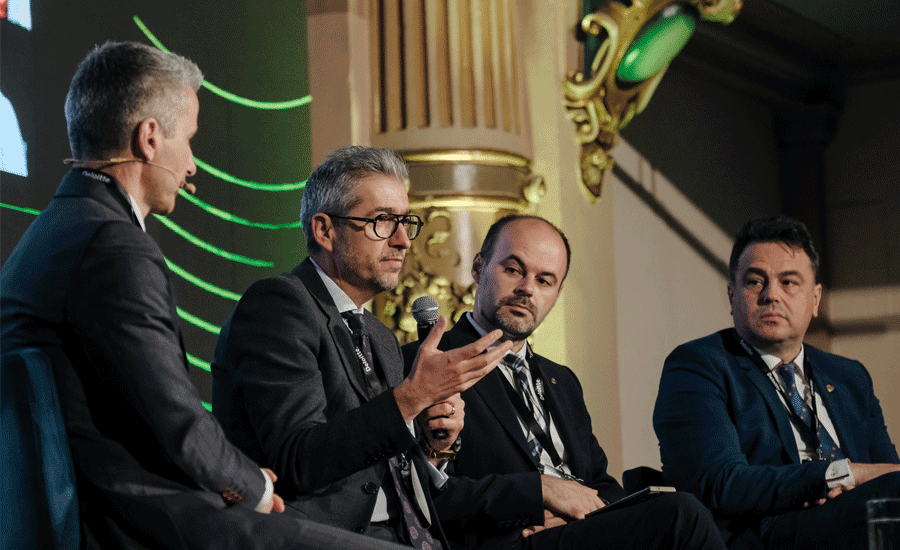
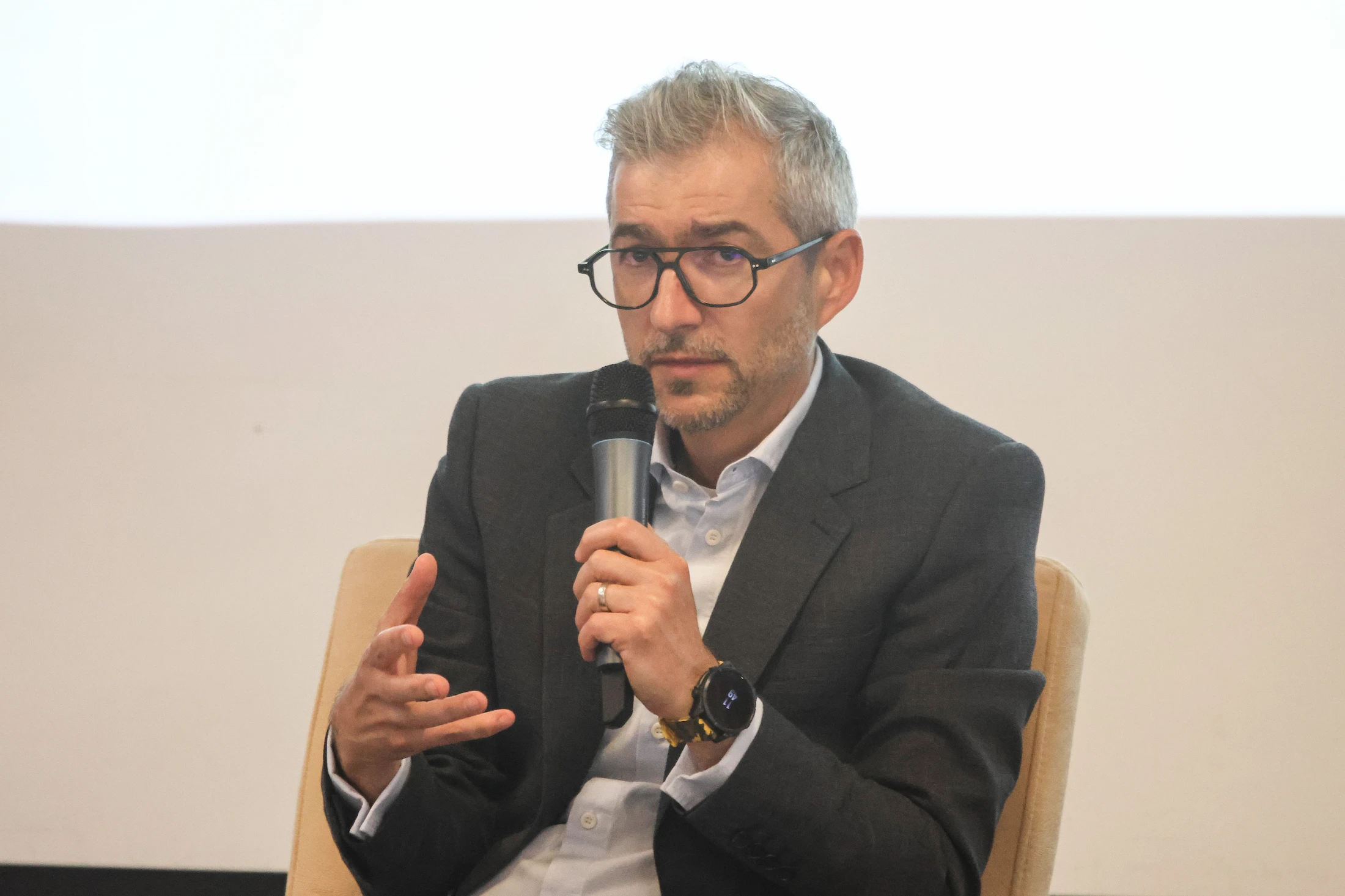
Sorin Ignat, Agribusiness Director at Banca Transilvania, was a guest on the ZF Agropower show, where he spoke about the potential of Romanian agriculture, a retrospective of the 2025 agricultural year, and the outlook for this year. The full interview can be viewed here, and below are some of his statements:
About agriculture in Romania
- Agriculture in Romania has developed significantly. It would be a shame not to acknowledge the merits of farmers who have accumulated experience and capital and invested in farms, which, in most cases, outperform those in the West in terms of technology and productivity.
- We are in a market somewhat on the edge of Europe, in a raw materials market, and, in practice, our competition is not necessarily with Western countries. It is rather with countries in the Black Sea basin, where we compete for exports of grain or live animals. This is the main challenge: to rediscover our markets and our identity so that we can compete with the others.
- Banks have financed agriculture. There has been a significant increase in the balance of loans from one year to the next, even in 2023, 2024, and especially 2025.
- Romania has greater potential than its neighbors, as Hungary does not have such easy access to the market. It is linked to the western market, and Bulgaria probably has less land available for large-scale cultivation than we do.
About investments, financing, and growth opportunities for farmers
- Animal husbandry is the first value-added chain after crop farming, and it is important for investors to move beyond this stage, which means moving into another market, also for raw materials, and moving on to processing and marketing food products. There aremany customers who are taking the step towards added value. After crop farming, they move on to animal husbandry, and then to processing.
- We will continue to finance performance, customers who have medium- and long-term plans for their investments, starting with the purchase of agricultural land, the construction of irrigation systems, development within farms, or expansion into other sectors. Banca Transilvania is fully open to finding sustainable projects for financing in 2026.
- Banca Transilvania is the main financier of the poultry sector. We carefully look at all growth opportunities for farmers and support them in their projects. Whether it's investments to increase capacity, expand the product range, or start-ups now entering the market at a favorable time for animal husbandry, it's important that these projects are sustainable and profitable, and that the scenarios modeled by investors are in line with what is happening in the market.
- We have the privilege of seeing investments from the seaside to Pecica, from Darabani to Giurgiu, and we see many good things happening.
Review of the 2025 agricultural year and outlook for this year
- In the 2025 agricultural year, we discussed a smaller quantity of corn. The quantity depends greatly on the objectives. If the objective is to produce a large quantity of corn, this would probably be a problem from a climate perspective, but this should not be the objective. We should produce crops that can be profitable under the current weather conditions.
- In addition to weather conditions, we should also consider market conditions, because when you have high production, prices fall and you are unable to ensure the same profitability you would have liked or the profitability you need to keep your business going.
- At the beginning of the calendar year, we can say that we had an autumn and winter with rain and snow like we haven't seen since 2017. So, if we look only at the water component, it's a good agricultural year. It remains to be seen how things will evolve and what will happen until harvest time. Because expectations are always high. Reality may undergo adjustments, as we saw last year with sunflowers and corn. If we were talking in July, optimism was at its peak at the beginning. The reality was different.
On the evolution of exports and the reduction of the agri-food deficit
- Agri-food exports have increased. At first, we attributed this to the market provided by Romanians living abroad who want to enjoy the flavors of Romania. However, recently, exports to markets that have no connection with Romania or no significant Romanian communities have been increasing. This shows that there is an openness to buying and comes as a result of investments in technology and quality products brought about by investments in the food industry.
- The agri-food deficit can be reduced either by decreasing imports or by increasing exports. It depends greatly on how consumption will evolve. However, consumption forecasts are cautious or cautiously optimistic, and this may lead to a slowdown in certain categories of imports. But export demand is likely to remain high for poultry meat.