Horia Ciorcilă, BT: We need to continue growing organically, at a rate above the market average, but we remain cautious and prepared for various scenarios
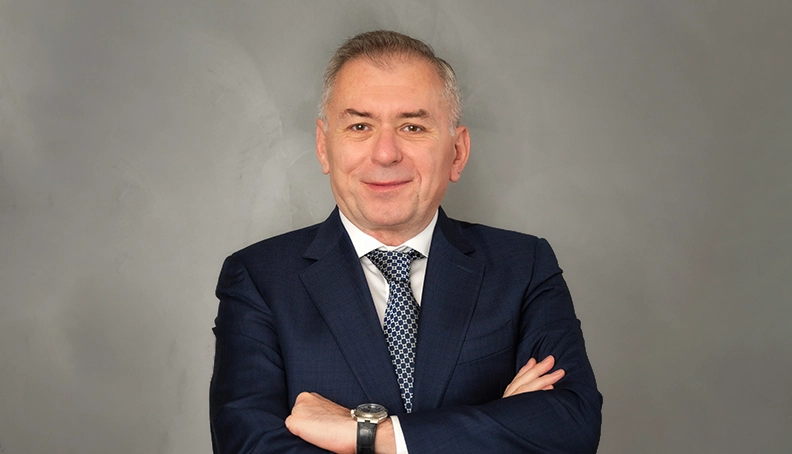
Horia Ciorcilă, Chairman of the Board of Directors at Banca Transilvania, gave an interview to Ziarul Financiar, reproduced in full below:
How did Banca Transilvania perform financially in the first few months?
We started the year with positive financial results, seeing growth across all business lines and in the number of customers, along with consistent commercial activity. As a result, we see a net profit for the bank of 950.2 million lei, 25.6% higher than in the first quarter of 2025, financial group assets reaching 227 billion lei, as well as nearly 140,000 new customers. The first few months mark a very strong start to the year, during which we will continue to build a strong bank that is relevant to our customers and to Romania.
Why did BT borrow 1 billion euros from foreign markets? Is there a plan to expand its presence in the international capital market through various instruments?
There were two reasons. The first relates to BT’s strategy to diversify its funding sources, and the second to European MREL requirements. It was not a decision driven by a need for liquidity, but rather related to the proactive and responsible management of our growth in the coming period. The transaction was a record for BT, and also the largest bond issue in Central and Eastern Europe.
I was very pleased to see such strong interest from international investors. I saw confidence in our financial strength and in Romania’s economy, as well as recognition of BT as a significant issuer among European banks. We will continue to tap into foreign markets when the bonds we issue deliver long-term value for the bank and our shareholders.
Why have there been recent changes to the Board of Directors?
There have been changes to the BT Board of Directors as the term of office has come to an end, as is the case every four years. The shareholders recently voted on the new composition, and in addition to those who were re-elected, we also have new members—a sign of both continuity and complementarity. This is also an appropriate time to express my appreciation for the contribution of the members whose terms have ended, and I thank them for their professionalism and dedication. At the same time, I would like to take this opportunity to wish the colleagues who have joined the board every success; their expertise will help us achieve our goals. For me, it is an honor to continue in the role of Chairman of the Board, especially since we have big and bold plans for the Banca Transilvania Group.
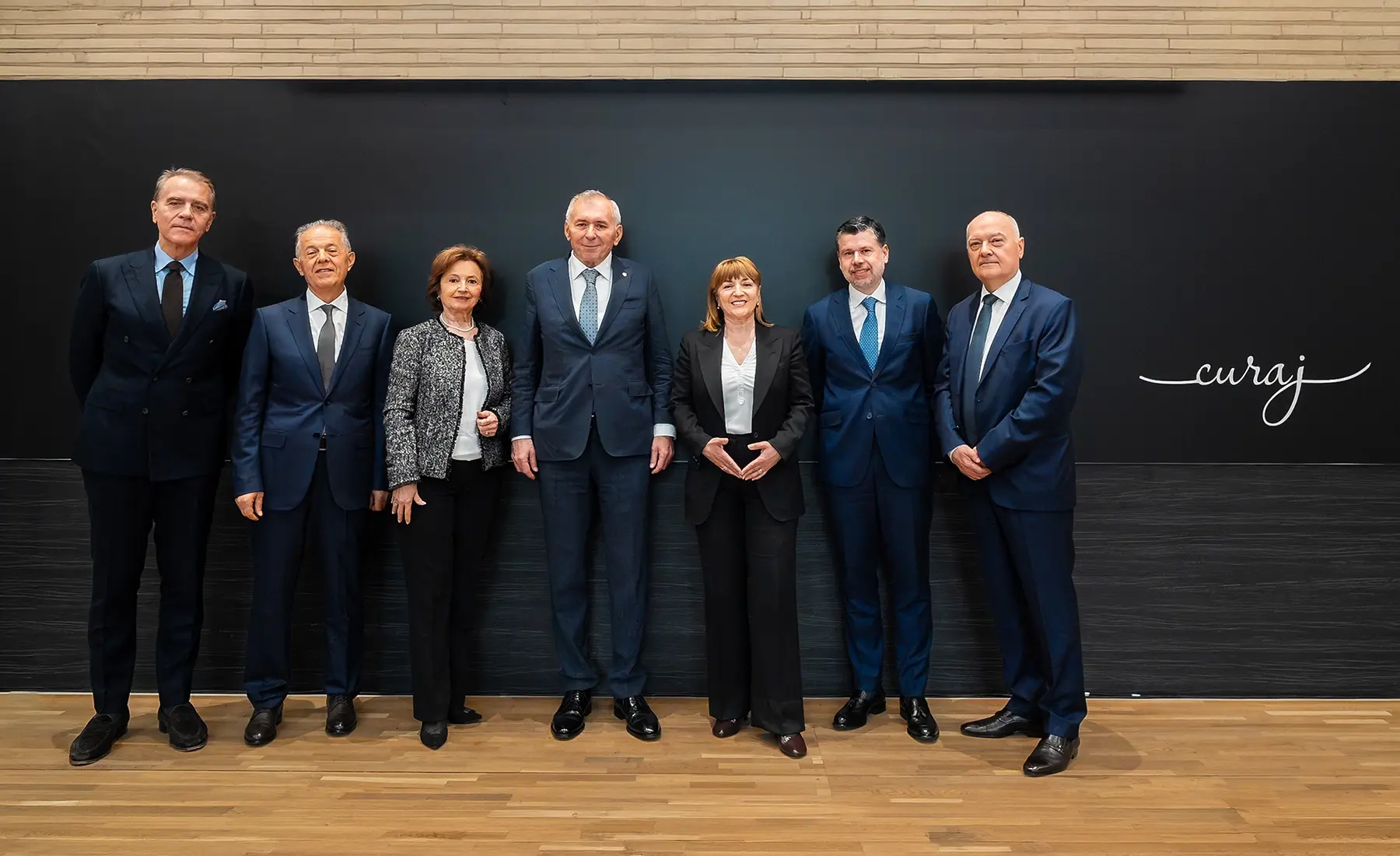 The BT Board of Directors for the 2026–2030 term (from left to right): Ivo Gueorguiev, Teodor Torgie, Mirela Bordea, Horia Ciorcilă, Gabriela Nistor, Florin Predescu-Vasvari, and Doru Lionăchescu
Is BT planning to expand its international shareholder base further?
The bank’s shareholder structure already reflects a mix of institutional and individual investors, both Romanian and international. We are not seeking to expand our shareholder base based on geographic criteria. For us, the bank’s sustainable growth, strong governance, and financial performance are essential. When these are consistently delivered, as we have done so far, the interest of international investors comes naturally. Today, 80% of the bank’s capital is Romanian, and over the past year, more than 8,800 people have chosen to invest in TLV shares. We have thus reached over 75,000 shareholders and investors—and it is a growing community.
What will be BT's future policy on profit distribution and dividends?
This year, we will distribute approximately one-third of our 2025 profit—1.4 billion lei—to shareholders in the form of cash dividends, while the remainder will be used to support the bank’s growth plans and strengthen its capital base. We will also issue bonus shares as a result of the capital increase through the capitalization of reserves.
We continue to pursue a balanced and prudent dividend policy that aims both to provide fair returns to shareholders and to maintain a solid capital base to support the future growth of the Banca Transilvania Group. The level of future distributions depends on the performance of the BT Group, the macroeconomic environment, and regulatory requirements.
How is the bank’s plan for 2026 changing or adapting in light of the geopolitical tensions that have arisen—the war in the Middle East, disruptions to oil supply routes, rising oil and gas prices, and the resurgence of inflation—which are having direct and indirect effects in Romania?
BT’s plan for 2026 remains solid and grounded in reality. At times like these, the role of a major bank is to remain prudent and prepared for a range of scenarios.
We are continuing to pursue BT’s strategic priorities; we are well-capitalized, have strong liquidity, and a diversified business model, which allows us to navigate volatile periods without straying from our long-term goals. The bank’s plan is to grow—a challenge, given our 23% market share and strong competition. The only option for the bank is to grow faster than the market average. In addition, we are strengthening the BT Group—we have vertical and horizontal integration, we offer complementary services and products, and our subsidiaries are growing even faster than the bank’s average, which is another strength.
The bank’s competitive advantage over the past 25 years has been its responsiveness—the ability to make quick decisions and to try new things or undertake transactions that others do not. Today we have an extremely experienced and loyal team, which gives us the confidence that we can continue even in complicated contexts, similar to the one we are currently facing in Romania, as well as at the macroeconomic level. We have reached the position we are in now thanks to the combination of these factors. However, our current size, complexity, and regulations have reduced our ability to maneuver—and we need to improve this.
Maintaining this entrepreneurial culture is vital to us and is a constant priority, accompanied, of course, by an impeccable reputation and a commitment to keeping our promises to our partners, customers, shareholders, and society as a whole.
We need to be ready to act quickly, but we no longer have the same sense of urgency we had years ago, when we were much smaller. Today, we need to innovate, cut through red tape, and be patient in making the right acquisitions. At the same time, it’s important not to forget where we came from and to remain humble and down-to-earth.
As the banking system continues to consolidate, is Banca Transilvania considering another bank acquisition?
The consolidation of the banking system will continue; it is a natural trend in a growing, maturing economy where there are still many small banks. Acquisitions are appropriate only when there is genuine synergy and when the end result delivers value for customers and the economy. Banca Transilvania will defend its leading position. We are looking at growth opportunities both organically and through acquisitions. We will consider only acquisitions that make sense and will avoid strategic errors caused by excessive enthusiasm. Organic growth remains our priority.
What steps must the bank take, and what should its balance sheet, valuation metrics, and profits look like in order to reach a market capitalization of 10 billion euros?
The question comes at a time when Romania is demonstrating exactly what the first prerequisite is for a market capitalization of 10 billion euros: a predictable macroeconomic environment.
I believe that the proposed 2026 budget is feasible and represents the essential foundation. I would not want to make a prediction because we are operating in a market like Romania’s, with serious budget deficit issues combined with an obvious political crisis, which complicates economic development. Our fundamentals are very solid, and we believe that to the extent we achieve our targets and objectives, the market will appreciate this, just as it has until now.
How can we explain the fact that BT and the banks are reporting rising profits even though the economy is in recession?
The rising profits of BT and the banking sector must be viewed within the specific context of the industry and the economic cycle. The banking sector has its own resilience mechanisms, and the results primarily reflect a solid balance sheet structure, strong risk discipline, and an interest rate environment that has supported net interest income.
The deposit base remains stable and continues to grow, providing banks with a highly competitive source of funding. At the same time, demand for credit, while selective, is healthy, and portfolio quality remains strong. Low levels of non-performing loans and prudent provisioning contribute to stable results. In a high-interest-rate environment, bank margins are more robust. This does not reflect an increase in risk, but rather a market structure in which banks are well-capitalized and can effectively manage the spread between asset and liability interest rates.
Last but not least, digitalization, operational efficiency, and the investments made in recent years enable banks to operate with better cost control.
For BT, these results stem from a diversified business model, a very large customer base, and a prudent growth strategy. Profitability is the result of a solid market position, risk discipline, and the ability to support the real economy. Profit must be viewed in relation to the capital employed—that is, the capital that shareholders have invested over time. If we look at it this way, banking is not a business that generates above-average returns because shareholders have contributed a lot of capital. More precisely, profit is high in absolute terms, but the return is normal, even below that of other economic sectors.
What questions do you have about 2026?
How will Central and Eastern Europe reposition itself in the current geopolitical context?
How and when will the process of reducing bureaucracy begin?
How can we ensure fiscal and legislative predictability for at least the next 2–3 years?
When will the process of genuine state reform and the creation of an economic environment attractive to local and international investors begin?
2026 is a year in which the questions are just as important as the answers.