Aurel Bernat, BT: The banking sector could double its assets over the next 5–10 years

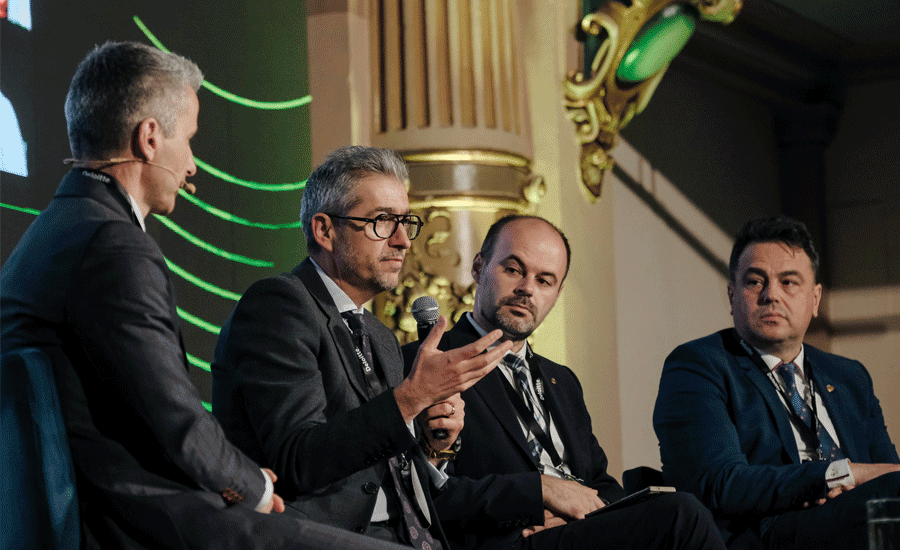
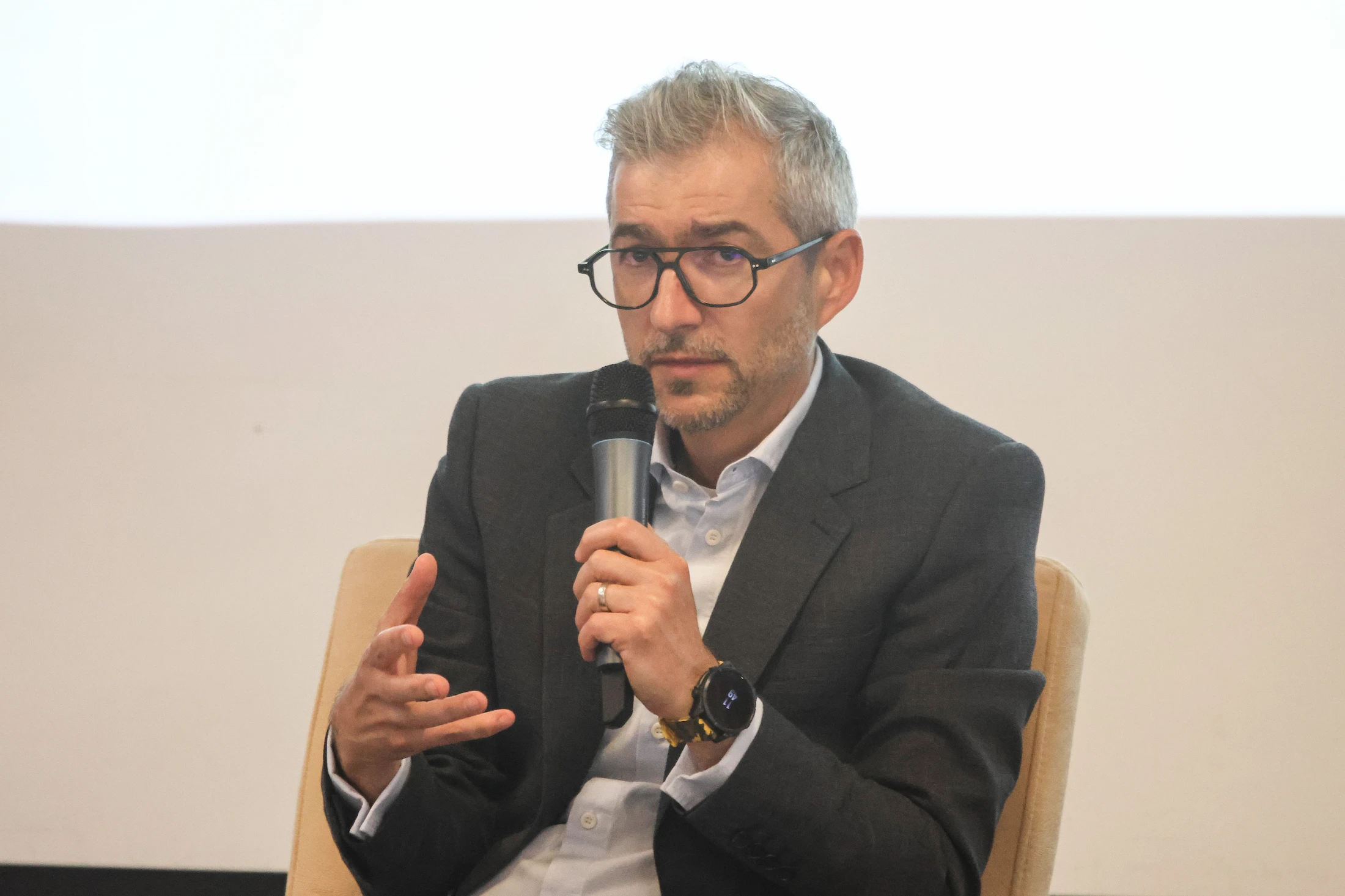
Aurel Bernat, Executive Director of Financial Institutions and Investor Relations at Banca Transilvania, attended the “Financial and Banking Market” conference organized by Ziarul Bursa. During the event, in addition to discussing the outlook for the banking sector, he also spoke about how foreign investors view Romania:
- I’m back from a three-week tour during which I met with investors in Vienna, London, and New York, because, as you know, we raised one billion euros for Romania last week through Banca Transilvania’s bonds. I can tell you that wherever I went, I never felt inferior to any other player in the international capital markets. As long as companies are performing—and we have many companies that are performing—especially in certain key sectors such as banking, which serves as a proxy for the economy, and the energy sector, which is very well represented on the Bucharest Stock Exchange and where there is momentum precisely due to the situation in the Middle East, the world views us favorably. We have 19 million inhabitants, domestic demand, 85% energy independence, and the Neptun Deep project. Furthermore, the impact of the war in Iran is, after all, limited for us.
- The world views us very favorably, but what foreign investors generally fail to understand is why, as a country, we always focus on the problems, portray them as major issues, know how to solve them, but never take action. It’s as if we’re looking at a forest but can’t see it because of the trees.
- Foreign and local investors want nothing more than stability. If there is stability and predictability, things can get done. With these factors in place, Romania’s story is very easy to sell. We are the second-largest economy in Eastern Europe after Poland; for ten years we had an average economic growth rate of 3.5%, and now, over the past two and a half years, we’ve seen growth of just 0.6–0.7%, but that’s understandable.
- The main issue I would raise concerns taxation. If we are constantly chasing after “national champions” in every sector and imposing excessive taxes—whether we call it a bank tax or something else—we ultimately weaken an industry whose primary purpose should be financial intermediation and the financing of the economy.
- Private credit as a percentage of GDP stands at approximately 25% in Romania—the lowest level in the European Union. Total assets as a percentage of GDP are around 50%, while the EU average is 200%, and private credit as a percentage of GDP is approximately 100%.
- We can count on the banking sector to double its assets over the next 5–10 years without any major surprises. This is a natural development aimed at closing the gap with the European Union. Given that GDP per capita is already at 79–80% of the European convergence level, the next sector that will be able to close the gap is banking, specifically financial intermediation.
You can watch the entire conference here.