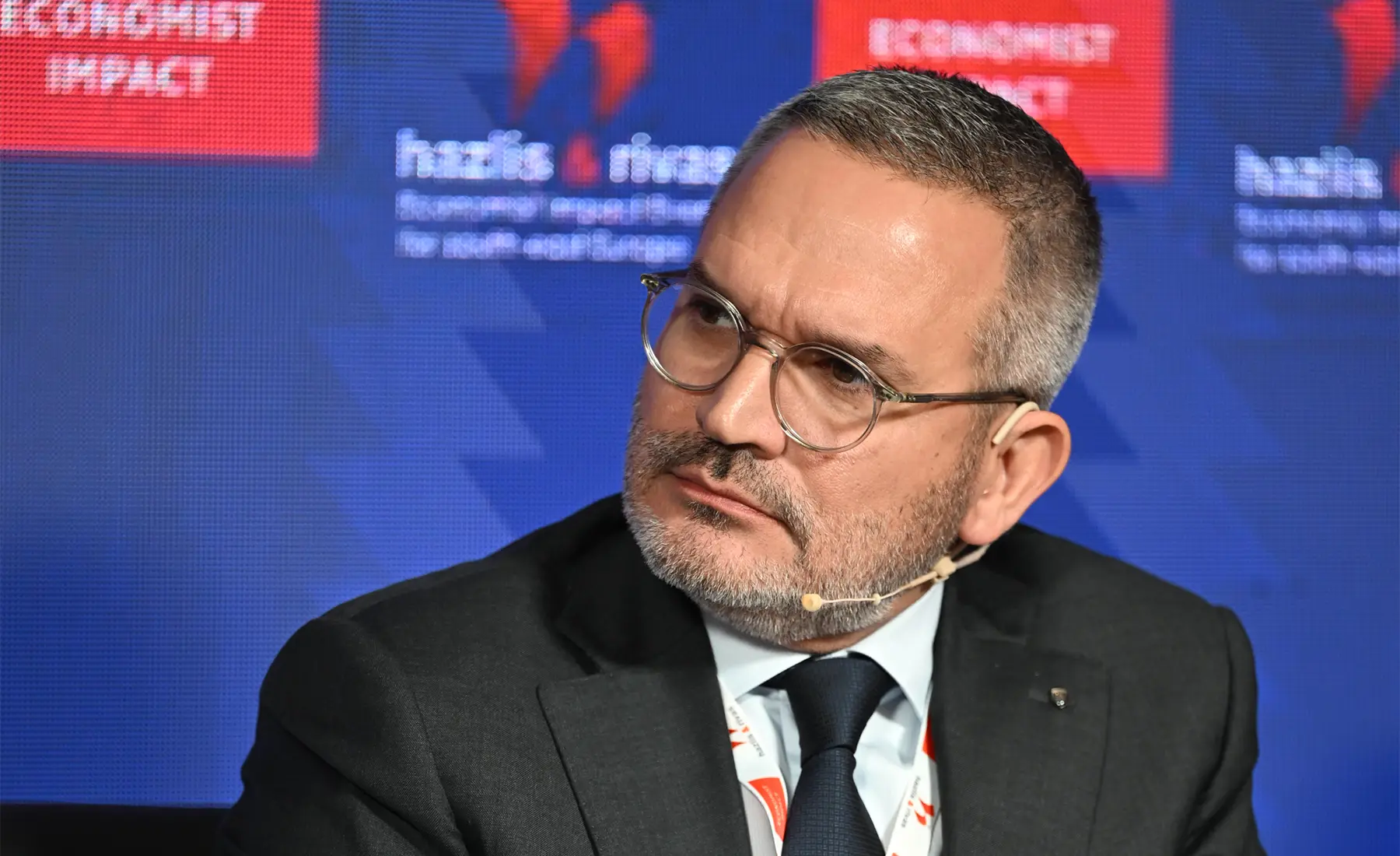
Dan Dascăl, CEO of BT Asset Management: Three opportunities and three risks for the Romanian economy in 2026

Dan Dascăl, CEO of BT Asset Management, at the invitation of Termene Business Hub, identified three opportunities and three risks for Romania's economy in 2026:
Three opportunities:
1. Access to EU funds – these funds are a cheap source of deficit financing, avoiding pressure on the domestic market and borrowing costs. Much of these funds go towards investments in infrastructure, digitization of administration, education, and health, which leads to increased competitiveness in the long term. Romania must prioritize accelerating the absorption of European funds and complying with the PNRR milestones so as not to lose access to funds.
2. Energy – investments in energy have an economic impact by reducing production costs, implicitly increasing productivity. They also help us improve our trade balance by reducing energy imports. Romania must continue its strategy of developing energy capacities and energy transport infrastructure.
3. Newlistings on the Bucharest Stock Exchange – several IPOs are in the pipeline, including large companies from various sectors of activity. The immediate impact is an increase in liquidity on the BSE, and the Romanian capital market would become more attractive. At the same time, the companies being listed would diversify their sources of financing by attracting capital. The Romanian state, in the case of sales of minority stakes, would reduce budgetary pressure.
Three risks:
1. Political instability – there is a risk that differences among the parties in the governing coalition will intensify, which, in an extreme scenario, could lead to the collapse of the governing coalition and the current government no longer enjoying majority parliamentary support.
Given its high budget deficit, Romania needs stability in order to implement its short- and medium-term reform plans and return to economic growth above the European average.
2. Geopolitical/external (regional) economic and financial crisis – we are located close to a conflict zone, and its resolution will require negotiations that could involve certain territorial concessions by Ukraine/Western allies in favor of Russia.
On another note, a regional economic crisis would affect us because our economic relations are primarily with European partners. Although Romania's debt-to-GDP ratio is reasonable, the share of interest payments in GDP is high, and any potential crisis would put pressure on Romania's financing costs. Continuing reforms provides us with a safety net, so that when market sentiment changes, we will be in good shape and able to weather the turbulence.
3. Persistent inflation and monetary restrictions – we still have high inflation in the medium term, and estimates may remain the same in 2026, after the VAT and excise duty increases and the liberalization of energy prices have been implemented. Under these circumstances, the NBR could maintain high interest rates for a longer period and delay fiscal relaxation until inflation moderates.
High financing costs are putting pressure on purchasing power, limiting consumption, and could affect the pace of economic growth. These risks underscore the need for prudent macroeconomic policies, credible fiscal consolidation, and ensuring a stable framework for access to domestic and external financing.