Bogdan Pleșuvescu, BT: Romania isn't short on capital, but it has a problem with economic coherence
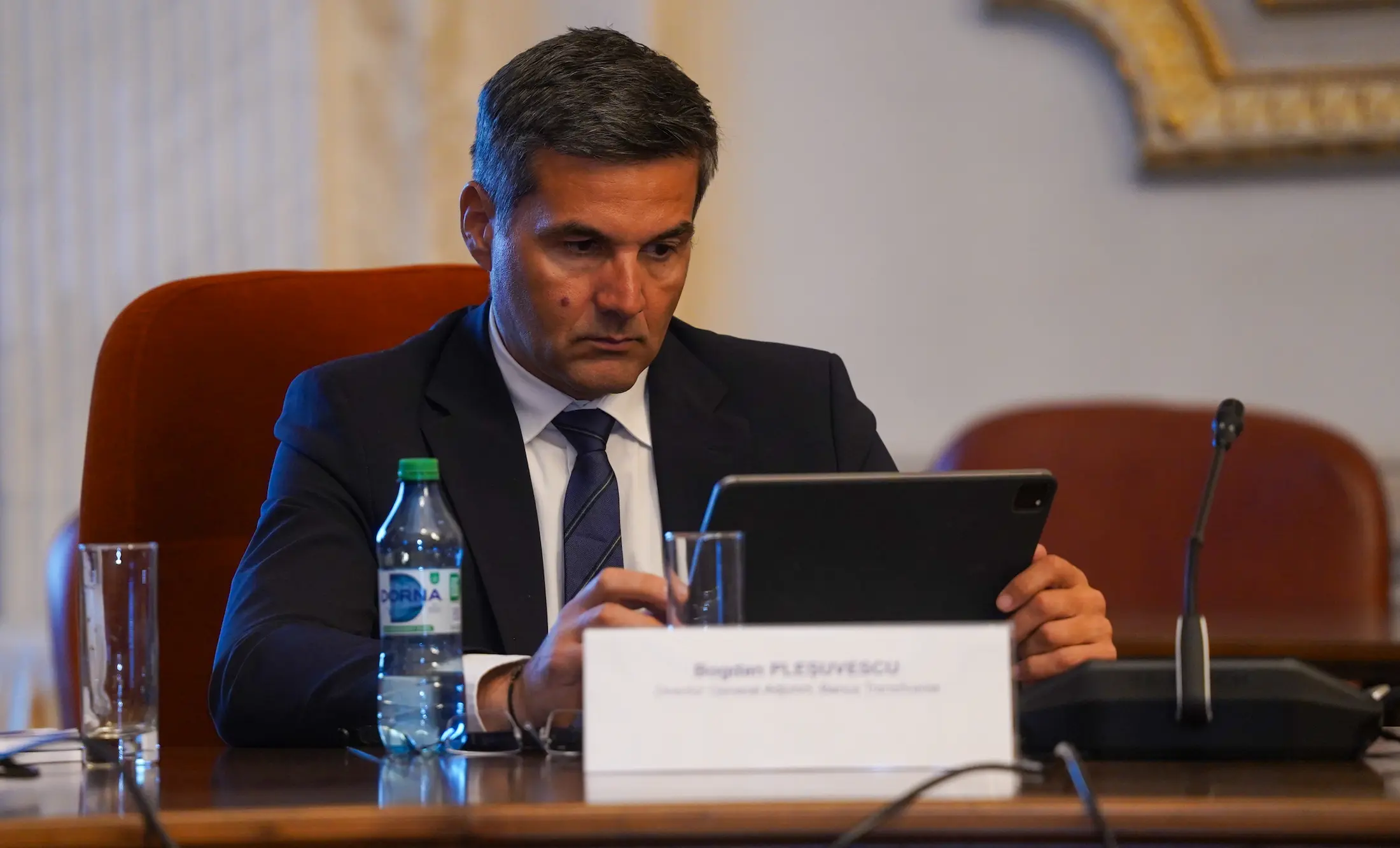
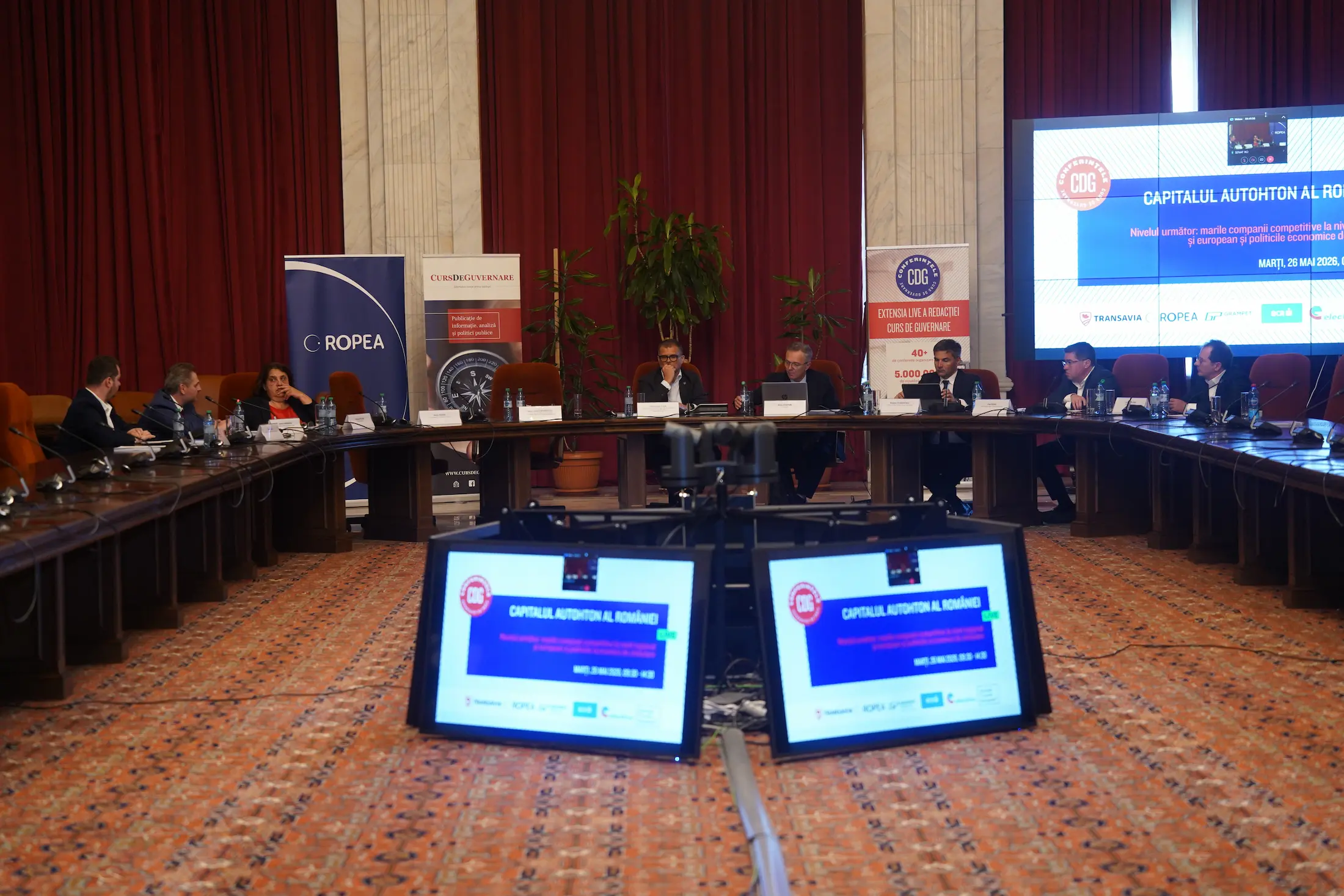
Bogdan Pleșuvescu, Deputy CEO of Banca Transilvania, attended the conference titled“Romania’s Domestic Capital – The Next Level: Large Companies Competitive at the Regional and European Levels and Economic Stimulus Policies,”organized by Curs de Guvernare, during which he made the following remarks:
Regional expansion of Romanian businesses:
- Romania does not lack domestic capital, nor does it lack capital in general. Romania has a problem with economic coherence. And here I believe we need to bring this issue to the forefront, because otherwise we risk always discussing only the effects and never the causes.
- When we talk about regional champions or regional expansion, you need to have a system in place to support you. And I’m not just referring to the banking system, but to an entire ecosystem, developed and established by policymakers, designed to help Romanian investments scale up.
- Because, at the end of the day, that’s what we’re talking about: scaling up Romanian investments. Once you’ve become a market leader in your country, in order to expand, grow your customer base, and increase your revenue, you need support from the government.
- We see that these things work when it comes to Poland, Hungary, or Germany—there are always government programs that help local companies expand abroad. And we, at this point, have a great deal of expertise and a strong desire to get things done, but we fall short when it comes to execution.
- Execution takes a very long time; we have plans and strategies, and we pay all sorts of consultants to map out our path and timeline, but when it comes to implementation—to actually carrying out and delivering—we suffer from a severe lack of consistency and commitment, especially when there are changes in government.
The role of the banking system in project financing:
- The question is what the banking system and domestic capital must do now to finance development, not merely to offset potential imbalances in Romania’s economy. Because, if we look at financial intermediation, in Romania it stands at around 50% of GDP, whereas in Europe the level of financial intermediation exceeds 100%.
- If we look at how much banks finance the non-governmental sector, we’re talking about roughly 24% of GDP, whereas the European average is 90%. So we need to find ways to identify projects that allow banks and other domestic capital participants to finance these initiatives, so that increased financial intermediation translates into investments in development and in scaling up the business in question, both domestically and abroad.
- At this point, the main challenge for banks is to identify these projects in a way that allows them to finance them. This is because, unlike other lenders, banks have a highly regulated system for assessing risks, evaluating a company’s financial performance, reviewing the company’s business plans, conducting various stress tests, and allocating capital or funds only to those projects they deem viable.
What does an ideal company seeking funding and planning to expand regionally look like:
- An ideal candidate for financing must be a company that has already demonstrated its success in its sector in Romania. You cannot secure financing in Romania for expansion unless you have a solid, well-established business already operating in the country.
- Next, you need to have a well-established, transparent corporate governance structure, in which the decision-making process is clearly defined, as well as a coherent, long-term business plan that includes an investment plan and a rationale for making those investments, whether they are horizontal or vertical. What’s important is to have this rationale: why you want to make that investment.
- Our portfolio includes clients who receive financing from Banca Transilvania specifically to expand their businesses beyond the country’s borders, whether to Italy, Spain, Germany, or Hungary. It’s true that we’re not yet at the level we see, for example, in Poland, but it’s a step in the right direction, and we believe these opportunities will multiply as there are more success stories from Romanian entrepreneurs looking to expand abroad.
The Banca Transilvania Group’s experience in expanding into the Republic of Moldova:
- The experience of people who go abroad offers two key benefits. The first is that when people from Romania, from the local business community, go abroad to participate in the acquisition, development, and transformation of a business outside Romania’s borders, this synergy, transformation, and the implementation of projects and organizational culture happen much faster, because there are people who already know the local company and ensure this transfer of know-how as quickly as possible.
- And something even more important, which will become clear over time: those people who go abroad and participate in such transformations overseas are, in fact, the foundation for the future expansion of Romanian business, because they will acquire knowledge and skills that those who remain in Romania do not have. They represent a very good talent pool for the organization itself in terms of future developments. For example, some of the people we invested in in the Republic of Moldova have been brought into Banca Transilvania, and they will most likely be involved in any future expansions.