Banca Transilvania Group at the Unchain Festival: Insights on AI, the Future of the Financial Industry, and Instant Payments

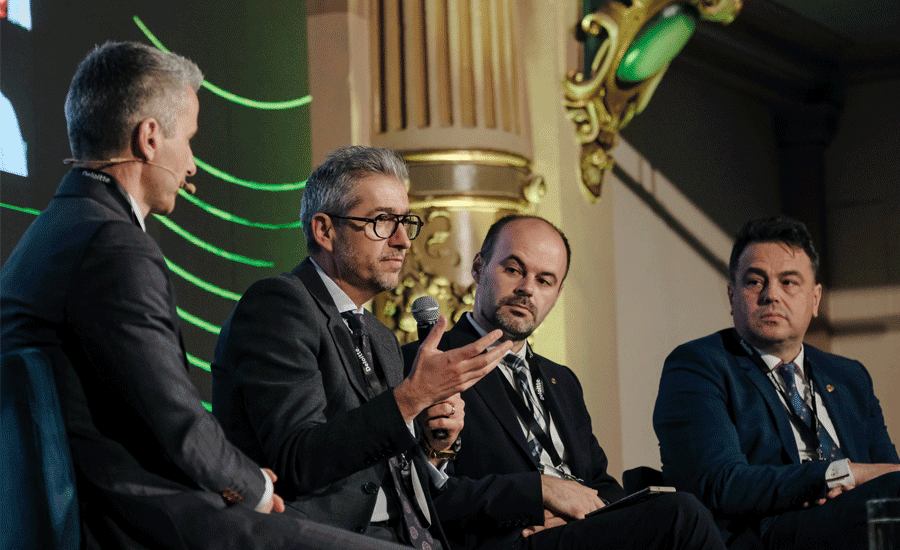
UNCHAIN Festival This event brought together over 1,000 leaders from 40 countries in Oradea to discuss the most pressing issues in the financial and tech industries. Banca Transilvania Financial Group was represented by Aurel Bernat, Executive Director of Financial Markets and Investor Relations, Banca Transilvania, Vlad Micu, CEO, INNO Investments, and Alexandru Bratu, Director of Card Acceptance & Payment Solutions, Banca Transilvania.
Over the course of two days, the event highlighted the key trends shaping the future of financial services, ranging from the adoption of artificial intelligence and the euro to instant payments, asset tokenization, and the digital transformation of banks.
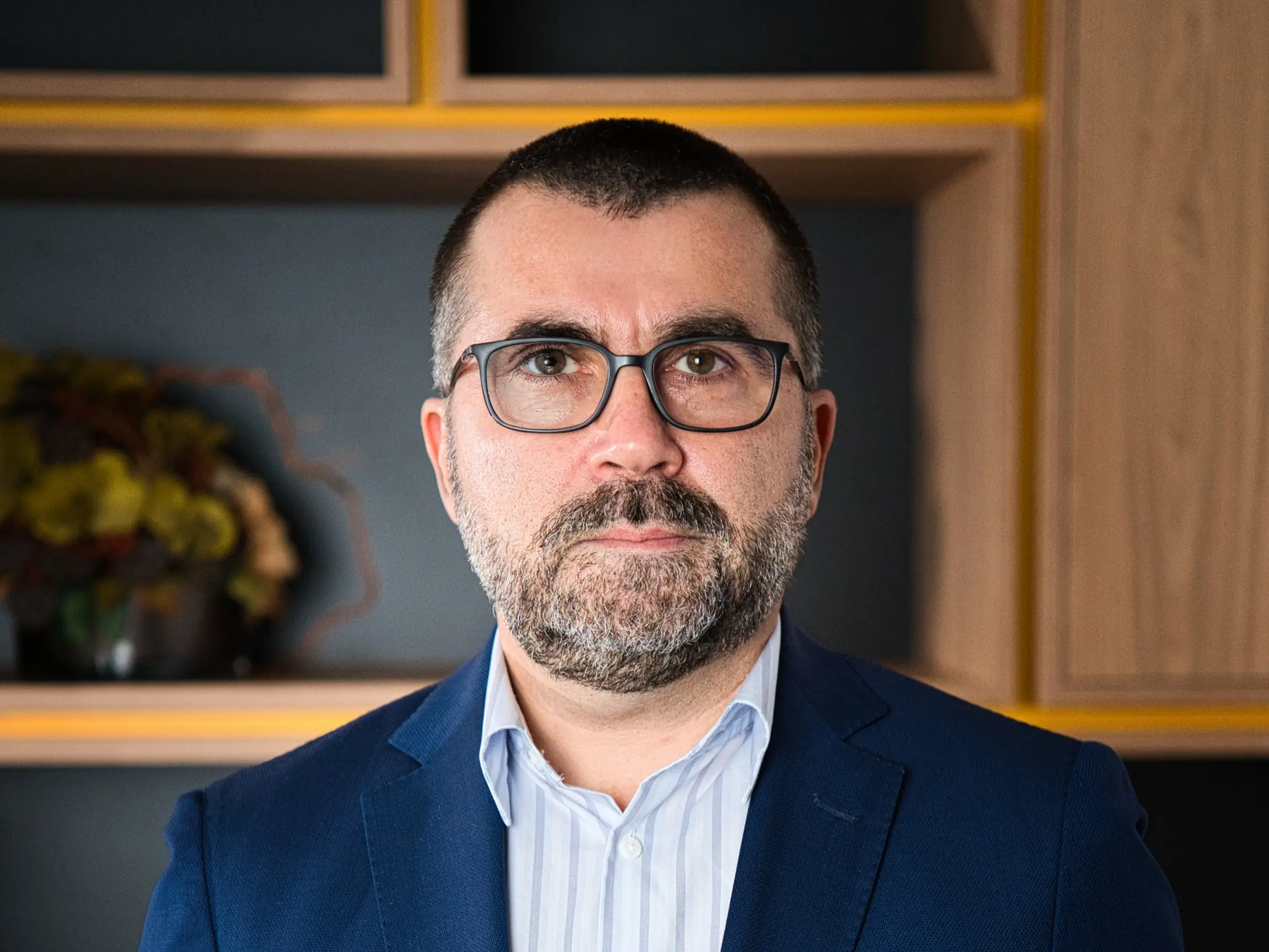
Aurel Bernat, Executive Director of Financial Markets and Investor Relations, Banca Transilvania
The Future of the Financial Industry in Central and Eastern Europe (CEE)
- The CEE economic region is, first and foremost, a geographical area steeped in history. However, we must bear in mind that we cannot claim there is a strong tradition of capitalism in a region that has only discovered this system in the last 30 years.
- For a long time, this part of Europe has suffered from a lack of capitalism, as well as a lack of freedom of movement and expression. And this absence has been reflected, among other things, in a highly fragmented banking system.
- Even though today there are large banks operating in the region that can be considered significant competitors to Western Europe, the challenge lies in the relationship between them, in the structure of the economies, and, by extension, in the structure of capital. Essentially, all CEE economies depend primarily on Western Europe. If we look at Romania, this dependence is particularly pronounced with regard to the economies of France and Germany, and to a lesser extent with regard to neighboring countries.
Adoption of the euro
- From a citizen’s perspective, membership in the eurozone is undoubtedly an advantage: processes are simpler and faster, and it becomes easier to understand prices. On the other hand, the Maastricht criteria remain essential. Two of them are particularly important: a public deficit below 3% and a public debt level of no more than 60% of GDP. Ultimately, however, meeting these conditions also becomes a political issue, because, in theory, they should be natural goals for any economy.
- Another relevant factor is the size of the GDP of countries joining the eurozone. Most of the countries that have gone through this process—even though they have performed very well and joined the European Union—are relatively small economies. Even the largest economies in the region, Poland and Romania, remain below the thresholds that would place them among Europe’s top economies. The Polish economy exceeds 1 trillion euros, while the Romanian economy is approaching roughly half that level, with positive projections for the coming years, but currently stands at less than 400 billion euros.
- In this context, I would say that these economies still retain a certain degree of flexibility because, at least for now, having their own currency is a competitive advantage.
- Therefore, while joining the eurozone may be attractive from a citizen’s perspective, from a governmental and economic standpoint, the discussion is much more nuanced and undoubtedly remains open.

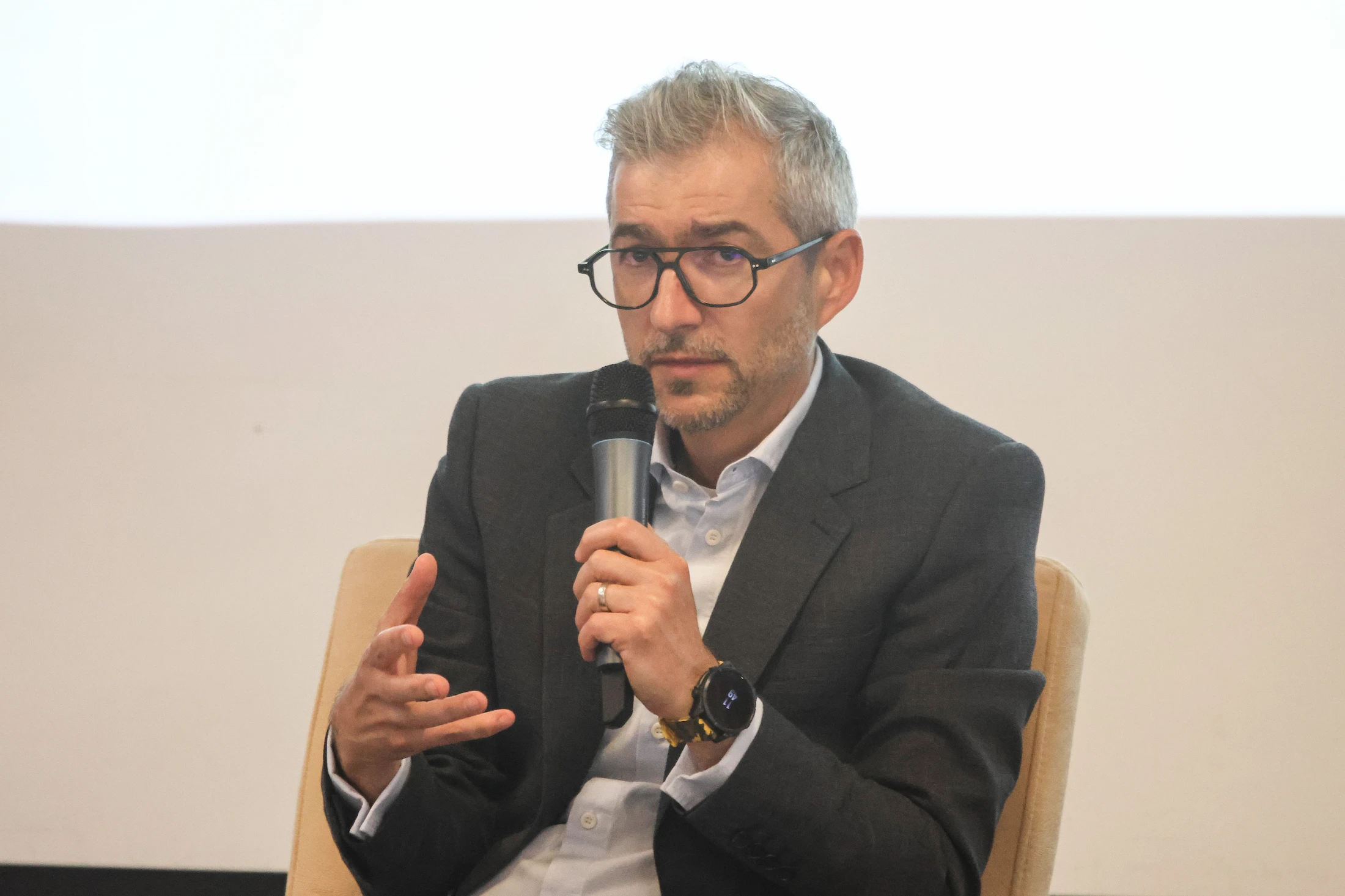
Vlad Micu, CEO, INNO Investments
Capital Management in the Age of AI
- INNO is one of the youngest subsidiaries of the Banca Transilvania Group and focuses on alternative investments. We operate across multiple asset classes and also manage an alternative real estate investment fund.
- It is often said that AI engines can achieve an accuracy of up to 94%, but only if the data is transparent and of high quality. In Romania, unfortunately, we operate in a context where these very elements are still lacking. We face transparency issues and inconsistencies in historical data, which makes adopting AI algorithms more difficult than in other markets. Nevertheless, we continue to improve efficiency by using automated assessment methods. We’re able to achieve results faster and, in some cases, at lower costs. In addition, we have tools that help us generate better forecasts.
- As long as we correctly define the growth criteria and consistently monitor them, we can better understand the optimal times to trade, whether we’re talking about buying or selling. We can also filter the market more quickly and efficiently, which, of course, has a direct impact on the quality of our decisions.
- Human expertise remains essential. In most cases, the results generated by algorithms must be validated. I would therefore say that technology does not replace the human factor, but rather complements it. At least in our case, business models and decisions still rely to a significant extent on human expertise, while AI is used to increase efficiency and speed of execution.
Between AI and the Human Factor
- I don’t think there’s a clear answer or a dividing line between AI and the human factor. There’s no fixed boundary between the two. If we look at the full spectrum of our activities, we see two extremes. At one end, we have repetitive, redundant processes automated through RPA, where human intervention is minimal. This is a first point of reference. At the other end, we have activities such as structuring agreements or negotiating transactions, where AI plays a limited role, and the decision is, in essence, a human one.
- Between these two extremes lies a broad spectrum of processes, evaluations, market analyses, and forecasts, where AI and the human factor interact in varying degrees. In fact, we are not talking about a separation, but rather about complementarity. AI is a valuable tool, but the human factor remains instrumental throughout the decision-making process.
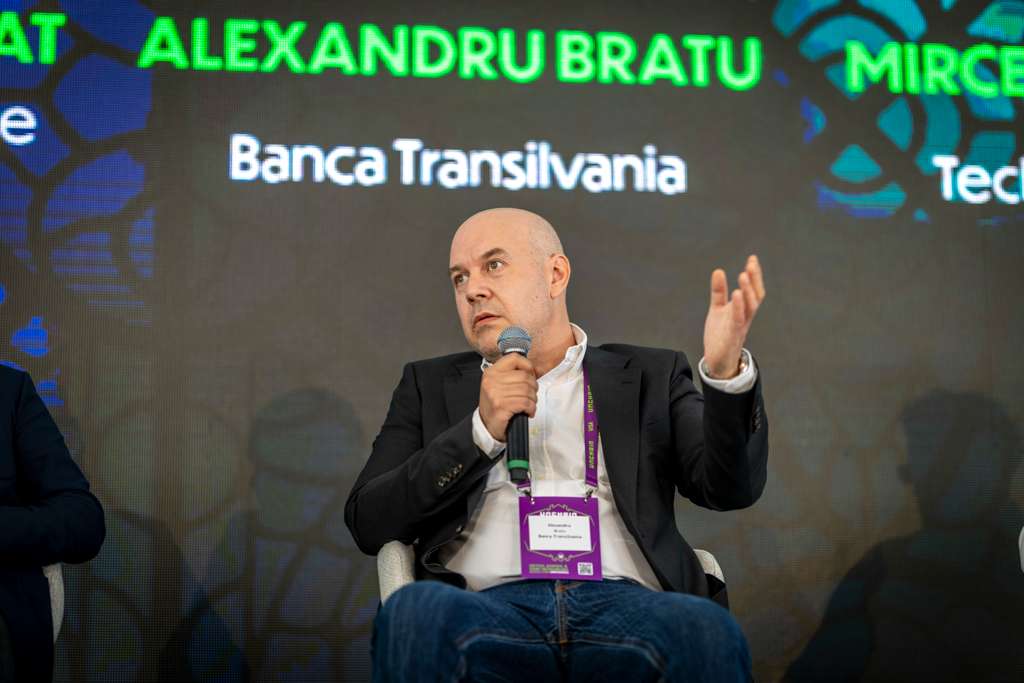
Alexandru Bratu, Director of Card Acceptance & Payment Solutions, Banca Transilvania
The Banca Transilvania Financial Group's Payment Ecosystem
- We're talking about complexity. Because, over time, we've built this payment infrastructure step by step, over many years, and today we see a very complex ecosystem.
- Merchants’ requirements remain extremely simple: they want payments processed in two to three seconds, comprehensive reporting, and integration with all their systems. We have always been a customer-centric company and have helped merchants with the solutions we built together—solutions they truly needed. However, with every new payment infrastructure we’ve developed, we’ve inevitably added layers of complexity—and even points of redundancy. Because, yes, on paper or in Figma, everything seems simple. But in real time, especially in large-scale operations, things aren’t nearly that simple—and that’s when the difference in experience and execution becomes apparent.
- We’re always talking about operational excellence, but every new process brings with it increasingly complex operations. Our role is to manage this complexity so that the merchant doesn’t have to. At the same time, we need to be careful: if we add too many processes that don’t scale well enough, this becomes a problem and will inevitably result in a lower adoption rate.
- We operate within a robust ecosystem, which we are building from the perspective of both issuing and accepting payment solutions. Banca Transilvania has the largestfootprint in this area, with an ecosystem that encompasses a wide range of integrated products; however, this position also comes with a great deal of responsibility regarding how we continue to develop this ecosystem.
The New Paradigm of Payment Systems
- We’re always ready for what’s next. As I was saying, we’re constantly building on the existing infrastructure. For us, the payment acceptance sector is a key driver in the development of this payment infrastructure. We’re not necessarily talking about a paradigm shift in payment types, but rather a continuous, almost “business as usual” process of building and expanding this highway.
- At the same time, we must constantly adapt what we have already built: our business partnerships, the services we provide, and the ecosystem we serve. That is why we always prepare—with a great sense of responsibility—the entire infrastructure and logistics, because the ability to be ready at all times makes all the difference.